Tuesday, February 23, 2016

L.A. Mafia Boss Jack Dragna 1956 Calvary Cemetery


Jack Ignatius Dragna[1] (April 18, 1891 – February 23, 1956) was an American Mafia member and Black Hander who was active in both Italy and the United States in the 20th century. He was active in bootlegging in California during the Prohibition Era in the United States. In 1931, he succeeded Joseph Ardizzone as the boss of the Los Angeles crime family after Ardizzone's mysterious disappearance and death in 1931. Both James Ragen and Earl Warren dubbed Dragna the "Capone of Los Angeles." Dragna remained the boss of the Los Angeles crime family from 1931 until his death in 1956.


Biography

Early life

Dragna was born Ignazio Dragna to Francesco Paolo Dragna and Anna Dragna in Corleone, Sicily, on April 18, 1891. On November 18, 1898, Dragna came to America on the S.S. Alsatia with his mother, older sister Giuseppa, and older brother Gaetano.[2] They stayed in Brooklyn with Antonio Rizzotto's family, also from Corleone. It is unknown when Dragna's father arrived in the United States. Dragna stayed in New York for ten years before returning to Sicily. As a young man, he joined the Italian Army and later the Sicilian Mafia.

In 1914, Dragna returned to America. He appears to have had a relationship with Gaetano Reina, who eventually would lead his own crime family in Manhattan and the Bronx. That same year, Dragna was a suspect in the murder of Jewish poultry dealer Barnet Baff. After the killing, Dragna fled to California and assumed the name Charles Dragna. Dragna was extradited to New York, but never went on trial. In 1915, Dragna was arrested for Black Hand extortion of a Long Beach man and served three years in prison. At the time of his extortion arrest, Dragna was using the alias Ignazio Rizzoto.

During the Prohibition Era, Dragna and his brother Gaetano (now named Tom) ran extortion and illegal liquor distillation operations. Ignazio Dragna now became Jack Ignatius Dragna. In 1922, Dragna married Francesca Rizzotto.[3] After his prison stint he worked closely with Joseph Ardizzone, a prominent mobster in Los Angeles.


Mafia Don

In 1931, Dragna succeeded Joseph Ardizzone as boss of the Los Angeles crime family. It was rumored that Dragna participated in Ardizzone's disappearance/death. The American Mafia wanted to make inroads in California, and supported Dragna, as opposed to the "Mustache Pete" Ardizzone. His brother Tom became his consigliere, he also had several relatives working in the crime family, but aside from his brother, his nephew Louis Tom Dragna (Tom's son) was the only other person heavily involved in the family.

As boss, Dragna's chief source of income came from extorting local bookmakers for "protection" money, although he was also the main illegal gambling operator in the city. Other businesses including running gambling ships, a heroin smuggling operation, and collecting extortion money. His close supporters included Girolamo "Momo" Adamo and John Roselli. Roselli had been a member of the Chicago Outfit, but left for California and worked with Dragna in gambling.[4] In the 1950s, Roselli left California and became the Mafia's main representative in Las Vegas. An old bootlegging associate of Dragna's, Anthony Cornero ran gambling ships off the coast of California. Tommy Lucchese, of the Lucchese crime family, was Dragna's main contact in New York (and the two were relatives according to Mickey Cohen). Dragna also controlled unions in the laundromat business and dress importing companies.[5]

Siegel and Cohen

As boss, Dragna often had to do business with representatives from the more powerful Cosa Nostra families in New York. When Benjamin "Bugsy" Siegel, an associate of the New York Luciano crime family, relocated to the West Coast during the late 1930s, he started his own rackets and formed an uneasy relationship with Dragna. Siegel brought in much more income for the Los Angeles family and generated a great deal of 'respect,' which Dragna resented. Although many sources speak of a rivalry between them, Dragna and Siegel worked closely together, especially at organizing a racing wire service on the West Coast.[6]

In June 1947, the East Coast crime families murdered Siegel in Los Angeles due to his failure to properly manage the new Flamingo Hotel in Las Vegas. Mickey Cohen, who had been serving as Siegel's bodyguard, immediately took over Siegel's rackets and refused to accept Dragna's authority. Dragna ordered several murder attempts on Cohen, but he managed to survive them all. On February 14, 1950, the California Commission on Organized Crime singled out Dragna as the head of a crime syndicate that controlled crime in Southern California.[7] Soon after, several Los Angeles family members were arrested for the bombing of Mickey Cohen's home. Dragna fled the state to avoid questioning. He later surrendered to authorities, and was questioned in the U.S. Senate Kefauver hearings, but denied all accusations against him.[8] Cohen was also questioned in the hearings, and as a result was convicted of federal tax evasion and was forced to give up control of his rackets to the Los Angeles family.


Private life and death

In 1953, the federal government ordered Dragna to be deported to Sicily. Back in 1932, Dragna had violated immigration law by illegally entering the United States at the San Ysidro border crossing in San Diego after a three-day stay in Mexico.[9] However, at the time of his death Dragna was still living in California, appealing against the deportation order.

Dragna was a very private boss who eschewed flashiness and attention. However, in the 1950s, the Los Angeles Police Department under Chief William H. Parker engaged in a campaign of harassment against organized crime figures. Dragna and his family were frequently arrested. When his wife Frances died in 1953, Dragna lost interest in running the Los Angeles family and instead focused on meeting new women. On one occasion, several members of the Los Angeles Police Department (LAPD) stationed themselves outside a trailer where Dragna and a girlfriend were having sex. Using listening devices, officers gained enough evidence to arrest Dragna for engaging in lewd acts.


On February 23, 1956, Dragna died of a heart attack in Los Angeles. His body was interred at Calvary Cemetery in East Los Angeles, California. Dragna was survived by two children. His son Frank Paul Dragna was a USC graduate and World War II veteran[10] who lost an eye in the war and was nicknamed "One Eye" to distinguish him from his cousin who had the same name ("One Eye" also had a glass eye).[11] Dragna had a daughter Anna Rosalia Dragna, who later married and changed her surname to Niotta.


In popular culture

Dragna appears as a character in James Ellroy's fictional L.A. Quartet novels, specifically The Big Nowhere (1988) and White Jazz (1992). In the 1991 film Bugsy, the highly fictionalized story of Bugsy Siegel, Dragna is played by Richard C. Sarafian. Though he does not make an actual appearance, he is mentioned several times in the video game L.A. Noire. Dragna appears as a character in the 2013 film Gangster Squad, where he is played by actor Jon Polito. Paul Ben-Victor plays Dragna in the neo-noir TV series Mob City.


Sources

1. "DRAGNA HELD FOR OUSTER - McGranery Says Californian Will Be Deported as Racketeer". The New York Times. 1952-12-08. 
2. Passenger Manifest for the S.S. Alsatia, 18 November 1898, available at Ellisisland.org. 
3. "Jack Ignatius Dragna and Frances Rizzotto, 1922". California, County Marriages, 1850-1952. FamilySearch. 
4. Goldsmith, John A. "Chapter 4: Organized Crime" (PDF). p. 59. 
5. Tyler, Gus (1967). Organized crime in America: a book of readings. University of Michigan Press. 
6. Redston, George; Crossen, Kendell F. (1965). The Conspiracy of Death. Bobbs-Merrill. 
7. "L.A. Police Raid Home of Dragna". Eugene Register-Guard. 1950-02-13. 
8. "The Crime Front". St. Petersburg Times. 1950-02-14. p. 6. 
9. "Dragna to Fight Deportation". Sarasota Herald-Tribune. 1953-03-03. p. 13. 
10. "Frank Dragna Sues Police for $350,000 in Damages". Los Angeles Times. 1950-04-08. 
11. Messing, Philip (2007-10-07). "Inside Feds' Mafia-Pedia". New York Post. 

References

Demaris, Ovid. The Last Mafioso: The Treacherous World of Jimmy Fratianno. Bantam Books, 1981. ISBN 0-553-27091-5
Fisher, David. Joey the Hitman: The Autobiography of a Mafia Killer. Da Capo Press: Massachusetts, 2002. ISBN 978-1-56025-393-8 
Lewis, Brad, Hollywood's Celebrity Gangster. The Incredible Life and Times of Mickey Cohen, Enigma Books: New York, 2007. ISBN 978-1-929631-65-0 
Sifakis, Carl. The Mafia Encyclopedia, Third Edition, Checkmark Books: New York, 2005. ISBN 978-0-8160-5695-8 
Warner, Richard N. "The First Mafia Boss of Los Angeles? The Mystery of Vito Di Giorgio, 1880-1922." On The Spot Journal (Summer 2008), 46-54. 
Dragna background (Part I) at Crimefile. Copyright Gatecitypublishing, 2010.

Further reading

Buntin, John (2009). L.A. Noir: The Struggle for the Soul of America's Most Seductive City. New York: Harmony Books. ISBN 9780307352071. OCLC 431334523. 

Friday, February 19, 2016

Actress Renata Vanni 2004 Westwood Village Cemetery


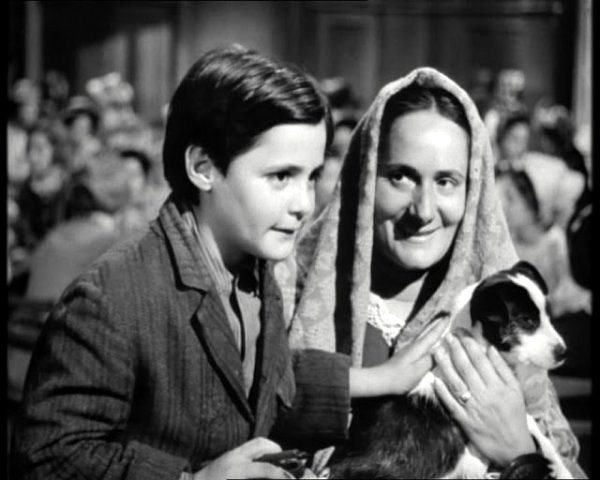
Renata Vanni (1909–2004) was an Italian-born American film actress.[1] 


She was better known for the films Pay or Die, A Patch of Blue and Lady in White.


She is buried with her actress daughter, Dr. Delia Salvi, at Westwood Village Cemetery. 


Filmography

El Paso (1949) as Lupita Montez (uncredited) 
The Doctor and the Girl (1949) as Mrs. Crisani, Tony's Mother (uncredited)
Stop That Cab as Josephine Moscadella (1951) 
Strictly Dishonorable (1951) as Mrs. Peccatori (uncredited) 
Westward the Women (1951) as Mrs. Moroni 
When in Rome (1952) as Mrs. Maroni (uncredited) 
Trouble Along the Way (1953) as Maria's Italian Mother (uncredited) 
Three Coins in the Fountain (1954) as Anna (uncredited) 
The Command (1954) as Mrs. Pellegrini (uncredited) 
Hell on Frisco Bay (1955) as Anna Amato 
It's Always Fair Weather (1955) as Mother (uncredited) 
The Seven Little Foys (1955) as Ballerina 
Mistress in Milan (uncredited) 
Serenade (1956) as Village Woman (uncredited) 
The Man in the Gray Flannel Suit (1956) as Italian Farmer's Wife (uncredited) 
Somebody Up There Likes Me (1956) Minor Role (uncredited) 
Four Girls in Town (1957) as Rosa (uncredited) 
Ten Thousand Bedrooms (1957) as Maid (uncredited) 
The Midnight Story (1957) as SeƱora Bergatina (uncredited) 
The Hard Man (1959) as Juanita 
The Beat Generation (1959) as Mrs. Rosa Costa (uncredited) 
The Jayhawkers! (1959) as Indian Woman 
Pay or Die (1960) as Mom Saulino 
Frontier Uprising (1961) as Augustina 
The Greatest Story Ever Told (1965) as Weeping Woman (uncredited) 
A Patch of Blue (1965) as Mrs. Favaloro 
Bob and Carol and Ted and Alice (1969) as Chianti Woman (uncredited) 
A Dream of Kings (1969) as Mrs. Falconis 
Murder in the First Person Singular (1974) as Mrs. Montopollis 
The Last Porno Flick (1974) 
Once Is Not Enough (1975) as Maria 
I Will... I Will... For Now (1976) as Receptionist 
Fatso (1980) as Zi Marie 
The Idolmaker (1980) as Mrs. Bevaloqua 
Margin for Murder (1981) as Mama De Fellita 
Lady in White (1988) as Mama Assunta 
Frank Nitti: The Enforcer (1988) 
Wait Until Spring, Bandini (1989) as Donna Toscana


References

1. Pitts p.99


Bibliography

Pitts, Michael R. Western Movies: A Guide to 5,105 Feature Films. McFarland, 2012.


Monday, February 15, 2016

"Buttons and Bows" Composer & Songwriter Ray Evans 2007 Westwood Village Cemetery


Raymond Bernard Evans (February 4, 1915 – February 15, 2007) was an American songwriter. He was a partner in a composing and songwriting duo with Jay Livingston, known for the songs they composed for films. Evans wrote the lyrics and Livingston the music for the songs.[1]


Biography

Evans, who was born Jewish, but later moved away from organized religion, citing it as a major cause of violence in the world[2] was born in Salamanca, New York to Philip and Frances Lipsitz Evans.[3] He was valedictorian of his high school class, where he played clarinet in the band. The Salamanca High School yearbook from 1931 states: "His original themes and brilliant oral talks are the despair of his classmates. Ray's quite a humorist, too. At times, his satire is positively killing."[4] He received a bachelor's degree in Economics from the University of Pennsylvania's Wharton School in 1936, writing a senior thesis on "The relation between the central bank, member banks and the money market."[1]

Evans met Jay Livingston while a student at Penn. Together they played in the University's college dance orchestra, "The Continentals." During school vacations the orchestra was engaged to play on several international cruises. After graduation the duo continued their partnership, seeking a career as a song-writing team in New York and later Hollywood.[5] Their first big break came after auditioning for comedians Ole Olsen and Chic Johnson in 1939. Their song "G'Bye Now" made it into Olsen and Johnson's Broadway revue Hellzapoppin'. In 1946 Livingston and Evans signed a contract with Paramount Studios in Hollywood.[6]


Livingston and Evans, both members of ASCAP, won three Academy Awards,[7] in 1948 for the song "Buttons and Bows," written for the movie The Paleface; in 1950 for the song "Mona Lisa," written for the movie Captain Carey, U.S.A.; and in 1956 for the song "Que Sera Sera," featured in the Alfred Hitchcock movie The Man Who Knew Too Much and sung by Doris Day. Another popular song that he and Livingston wrote for a film was the song "Tammy," written for the 1957 movie Tammy and the Bachelor. The song was nominated for an Academy Award for Best Song. Livingston and Evans also wrote popular TV themes for shows including Bonanza and Mr. Ed. Their Christmas song "Silver Bells" intended for the 1951 Bob Hope film The Lemon Drop Kid, has become a Christmas standard.[8]

Evans appeared as himself with Livingston in Sunset Blvd. (1950) in the New Year's Eve party scene.

In 1958, the songwriting team was nominated for a Tony Award for the musical Oh, Captain! Evans also collaborated separately with Michael Feinstein, Henry Mancini, Max Steiner, and Victor Young. The song "Dear Heart" from the 1964 film of the same name was written by Livingston and Evans with Henry Mancini; it was nominated for an Oscar and for the Song of the Year Grammy Award, and was recorded multiple times, charting for Andy Williams, Jack Jones, and Henry Mancini.


Legacy and death

Evans is an inductee in the Songwriters Hall of Fame.[9] He and Livingston have a star on the Hollywood Walk of Fame.[10]

He died at age 92 in Los Angeles, California, on the 42nd anniversary of the death of Nat King Cole, who had made "Mona Lisa" so famous.[11] He was married for nearly 56 years to actress, writer, and playwright Wyn Ritchie Evans.[12] His legacy is maintained and developed by the Ray and Wyn Ritchie Evans Foundation in Culver City, California. The Ray Evans Seneca Theater in his hometown of Salamanca, NY is named after him.


Ray Evans ashes are interred at Westwood Village Cemetery. 


Works

Ray Evans wrote more than 700 songs for screen, stage, and television. Most were composed with writing partner Jay Livingston.[13]


References

1. Ray Evans papers, 1921-2012, Kislak Center for Special Collections, Rare Books and Manuscripts, University of Pennsylvania. 

2. Bloom, Nate (2006-12-19). "The Jews Who Wrote Christmas Songs". InterfaithFamily.  
3. "NNDB". 
4. The Seneca. Salamanca, NY: Published by the senior class of Salamanca High School. 1931. 
5. Whorf, Michael (2012). American Popular Song Lyricists: Oral Histories, 1920s-1960s. Jefferson, NC: McFarland and Company. 
6. Gottlieb, Robert and Robert Kimball, eds. (2002). Reading Lyrics. New York: Pantheon Books. 
7. Spencer Leigh (19 October 2001). "Obituary: Jay Livingston". The Independent. 
8. Furia, Philip and Lasser, Michael (2006). America's Songs: The Stories Behind the Songs of Broadway, Hollywood, and Tin Pan Alley. Routledge. p. 233. 
9. "Ray Evans". Songwritershalloffame.org.  
10. "Hollywood Walk of Fame". 
11. "Que Sera composer Ray Evans dies". BBC News. 2007-02-17. 
12. "Wyn Ritchie Evans: Performer, Wife of Ray Evans (obituary)". Variety. 
13. The Ray and Wyn Ritchie Evans Foundation Official Website


Sunday, February 14, 2016

"The Godfather II" Actor Michael Gazzo 1995 Westwood Village Cemetery


Michael Vincenzo Gazzo (April 5, 1923 – February 14, 1995) was an American playwright who later in life became a film and television actor.[1]

Frank Corsaro and Michael Gazzo and Marilyn Monroe and Lee Strasberg

Biography

He was born on April 5, 1923. Gazzo was a member of the Actors Studio and would later go on to train such actors as Debra Winger, Henry Silva and Tony Sirico. He authored the gritty Broadway play about drug addiction A Hatful of Rain, which ran for 389 performances in 1955 and 1956. It starred Ben Gazzara and Shelley Winters in the two lead roles, and subsequently was adapted into a film by Oscar-winning director Fred Zinnemann in 1957. The movie was nominated for an Academy Award for Best Actor in a Leading Role (Anthony Franciosa). A 1968 made-for-television version (as a filmed play) starred Peter Falk, Sandy Dennis and Michael Parks.[2] 


Gazzo's other screen writing credits include the Elvis Presley American musical drama King Creole in 1958.[3] He also authored Broadway play 'The Night Circus' starring Ben Gazzara.[4]


As an actor, Gazzo was nominated for an Academy Award for Best Supporting Actor for his role as Frank Pentangeli in The Godfather Part II. He lost to Robert De Niro, who played Vito Corleone in the same film.


Gazzo died in 1995 due to complications from a stroke.[5] He was interred in the Room of Prayer at Westwood Village Memorial Park Cemetery in Los Angeles.


Filmography

On the Waterfront (1954) 
The Gang That Couldn't Shoot Straight (1971) 
The Godfather Part II (1974) 
Crazy Joe (1974) 
Kojak (1975) 
Brinks: The Great Robbery (1976) 
Black Sunday (1977) 
Starsky and Hutch (1977) 
Barnaby Jones (1977) 
Baretta (1977) 
The Feather and Father Gang (1977) (Season 1, Episode 12 "The Mayan Connection") 


Columbo (1978) episode Murder Under Glass 

Fingers (1978) 

King of the Gypsies (1978) 
Taxi (1979) 

The Fish That Saved Pittsburgh (1979) 

Gangsters (1979) 
Border Cop (1979) 
Fantasy Island (1979) (Season 3, Episode 14 "The Lookalikes/Winemaker") 
Love and Bullets (1979) 

Alligator (1980) 

Cuba Crossing (1980) 
Sizzle (1980) 
Magnum, P.I. (1981) episode "The Ugliest Dog in Hawaii" 
Body and Soul (1981) 
The Winter of Our Discontent (1983) 
Sudden Impact (1983) 
Cannonball Run II (1984) 
Fear City (1984) 
Cookie (1989) 
Beyond the Ocean (1990) 
Forever (1991) 
Last Action Hero (1993) 
Ring of Musketeers (1994) 
L.A. Law (1994) (episode "McKenzie, Brackman, Barnum and Bailey")


References

1. http://www.imdb.com/name/nm0311155/bio?ref_=nm_ov_bio_sm/ 
2. "A Hatful of Rain". IMDb. 3 March 1968. 
3. eibon04 (2 July 1958). "King Creole (1958)". IMDb. 
4. "The Night Circus on Broadway - Information, Cast, Crew, Synopsis and Photos". playbillvault.com. 
5. "Michael V. Gazzo, 71, Is Dead; Playwright of 'Hatful of Rain'". The New York Times. 24 February 1995.

Sources

Bacarella, Michael, ItalActors: 101 Years of Italian Actors in U.S. Entertainment, The National Italian American Foundation.


Jazz Drummer Louie Bellson Dies at Cedars-Sinai 2009


Luigi Paulino Alfredo Francesco Antonio Balassoni (July 6, 1924 – February 14, 2009),[1] known by the stage name Louie Bellson (his own preferred spelling, although he is often seen in sources as Louis Bellson), was an American jazz drummer. He was a composer, arranger, bandleader, and jazz educator, and is credited with pioneering the use of two bass drums.[2]


Bellson was an internationally acclaimed artist who performed in most of the major capitals around the world. Bellson and his wife, the actress and singer Pearl Bailey[3] (married 1952–1990), had the second highest number of appearances at the White House (only Bob Hope had more). He was a vice president at Remo, a drum company.[4] He was inducted into the Modern Drummer Hall of Fame in 1985.[5]


Biography

Louie Bellson was born in Rock Falls, Illinois, in 1924, and started playing drums at three years of age. At age 15, he pioneered the double-bass drum set-up. At age 17, he triumphed over 40,000 drummers to win the Slingerland National Gene Krupa contest. Louie graduated from Moline High School, Moline, IL, in 1942.[2][6] His detailed sketch earned him an 'A' in his high school art class.

In an interview in 2005 with Jazz Connection Magazine he credited Papa Jo Jones and Big Sid Catlett as influences as well as Chick Webb. "I have to give just dues to two guys who really got me off on the drums – Big Sid Catlett and Jo Jones. They were my influences. All three of us realized what Jo Jones did and it influenced a lot of us. We all three looked to Jo as the 'Papa' who really did it. Gene helped bring the drums to the foreground as a solo instrument. Buddy was a great natural player. But we also have to look back at Chick Webb's contributions, too."

In 1943, he performed with the Benny Goodman band and Peggy Lee in The Powers Girl,[7] the first of his many film appearances. He also appeared in 20th Century Fox's classic The Gang's All Here (1943) in the orchestra while Carmen Miranda sang "Paducah."[8] Bellson was 24 and a veteran of a U.S. Army band when he joined Danny Kaye, Louis Armstrong, Tommy Dorsey, Lionel Hampton, Charlie Barnet, Benny Carter, Mel Powell, Kenny Dorharn, Harry Babasin, Al Hendrickson, Buck Washington, and Goodman for the Howard Hawks film A Song Is Born (1948).

Between 1943 and 1952, Bellson performed with Benny Goodman, Tommy Dorsey, Harry James and Duke Ellington (for whom he wrote "Skin Deep" and "The Hawk Talks").


Personal life

In 1952 he married Pearl Bailey, and he left Ellington to be her musical director. They adopted a boy, Tony, in the mid-1950s, and a girl, Dee Dee J. Bellson, who was born on April 20, 1960. Son Tony Bellson died in 2004, and DeeDee Bellson died on July 4, 2009 at age 49, within five months of her father.


Later life

After Pearl Bailey's death in 1990, he married his second wife, Francine, in September 1992.[9] Trained as a physicist and engineer at MIT,[10] Francine Bellson (nƩe Wright) became his manager.[4] The union lasted until his death in 2009.

Later in the 1950s and 1960s, he performed with Jazz at the Philharmonic or J.A.T.P., Tommy and Jimmy Dorsey, Count Basie, Duke Ellington again, and Harry James again, as well as appearing on several Ella Fitzgerald studio albums.

Over the years, Bellson took several bandleader's holidays to play under the direction of other leaders or to lead someone else's band. During the 1960s, he rejoined Ellington for his Emancipation Proclamation Centennial stage production, My People in 1963, the motion picture soundtrack of Assault on a Queen in 1966, and A Concert of Sacred Music which is sometimes called The First Sacred Concert in 1965. Ellington called these concerts "the most important thing I have ever done." In 1966, Bellson toured briefly with both Basie and ex-boss Harry James. In 1967 Bellson recorded an album entitled 'Repercussion' in which he played alongside his great friend, the British drummer and percussionist, Eric Delaney. On December 5, 1971 he took part in a memorial concert at London's Queen Elizabeth Hall for the late (drummer) Frank King. This special tribute show also featured legendary British session and big band drummer, Kenny Clare, as well as Buddy Rich. The orchestra for the occasion was made up of top musicians and led by Bobby Lamb and Ray Premru. The concert was released on vinyl LP in 1972.(Re-released in 2011 on the Vocalion label.) Throughout the 1980s and 1990s he worked with territory bands like the Unifour Jazz Ensemble. 


A few years later, renowned drummer Buddy Rich (referred to by many as "the world's greatest drummer" over the years) paid Bellson a supreme drummer-to-drummer/bandleader compliment by asking him to lead his band on tour while he (Rich) was temporarily disabled by a back injury. Bellson proudly accepted.

He also recorded extensively and led his own bands (occasionally maintaining separate bands on each coast). His sidemen have included Kenny Hitchcock, Ray Brown, Pete and Conte Candoli, Chuck Findley, John Heard, Roger Ingram, Blue Mitchell, Don Menza, Larry Novak, Nat Pierce, Bobby Shew, Frank Rosolino, Clark Terry,and Snooky Young. He was equally effective as a big band drummer and as a small group drummer. In 2006 a new album appeared, The Sacred Music of Louie Bellson and the Jazz Ballet. In May 2009, Francine Bellson fascinated jazz fans when she told The Jazz Joy and Roy syndicated radio show, "I like to call (Sacred) 'how The Master used two maestros,'" adding, "When (Ellington) did his sacred concert back in 1965 with Louie on drums, he told Louie that the sacred concerts were based on 'in-the-beginning,' the first three words of the bible."

Francine Bellson recalled how Ellington explained to Louie that "in the beginning there was lightning and thunder and that's you!" Ellington exclaimed, pointing out that Louie's drums were the thunder. Both Ellington and Louie, says Mrs. Bellson, were deeply religious.

"Ellington told Louie, 'You ought to do a sacred concert of your own' and so it was," Mrs. B. said, adding, "'The Sacred Music of Louie Bellson' combines symphony, big band and choir, while 'The Jazz Ballet' is based on the vows of Holy Matrimony...."

In May 2007, Bellson recorded a number of his compositions and arrangements for big band, featuring Clark Terry on Flugelhorn, with Kenny Washington and Sylvia Cuenca on drums. The big band was manned by the members of Clark Terry's Big Band. The music was recorded in Studio A at Clinton Recording Studios in New York City. The resultant album, Louie and Clark Expedition 2 was released in January 2008.

Bellson led his own orchestra almost steadily for more than forty years. His last band was called the Big Band Explosion.


Death

On February 14, 2009, Bellson died age 84 at Cedars-Sinai Medical Center from complications of a broken hip in December 2008 and Parkinson's disease.[3] He is buried next to his father in Riverside Cemetery in Moline, Illinois.[9]


Compositions and arrangements

As a prolific creator of music, both written and improvised, his compositions and arrangements (in the hundreds) embrace jazz, jazz/rock/fusion, romantic orchestral suites, symphonic works and a ballet. Bellson was also a poet and a lyricist. His only Broadway venture, Portofino (1958), was a resounding flop that closed after three performances.[11]

As an author, he published more than a dozen books on drums and percussion. He was at work with his biographer on a book chronicling his career and bearing the same name as one of his compositions – "Skin Deep."

In addition, "The London Suite" (recorded on his album Louie in London) was performed at the Hollywood Pilgrimage Bowl before a record-breaking audience. The three-part work includes a choral section in which a 12-voice choir sings lyrics penned by Bellson. Part One is the band's rousing "Carnaby Street," a collaboration with Jack Hayes.

In 1987, at the Percussive Arts Society convention in Washington, D.C., Bellson and Harold Farberman performed a major orchestral work titled "Concerto for Jazz Drummer and Full Orchestra," the first piece ever written specifically for jazz drummer and full symphony orchestra. This work was recorded by the Bournemouth Symphony Orchestra in England, and was released by the Swedish label BIS.


Drum tutoring

Bellson was known throughout his career to conduct drum and band clinics at high schools, colleges and music stores.[2]

Bellson maintained a tight schedule of clinics and performances of both big bands and small bands in colleges, clubs and concert halls. In between, he continued to record and compose, resulting in more than 100 albums and more than 300 compositions. Bellson's Telarc debut recording, Louie Bellson And His Big Band: Live From New York, was released in June 1994. He also created new drum technology for Remo, Inc., of which he was vice-president.

Bellson received an honorary Doctor of Humane Letters in 1985 at Northern Illinois University. As of 2005, among other performing activities, Bellson had visited his home town of Rock Falls, Illinois every July for Louie Bellson Heritage Days, a weekend in his honor close to his July 6 birthday, with receptions, music clinics and other performances by Bellson.[2] At the 2004 event celebrating his 80th birthday, Bellson said, "I'm not that old; I'm 40 in this leg, and 40 in the other leg."[12] He also celebrated his birthday every year at the River Music Experience in Davenport, Iowa.


Awards

Among Bellson's numerous accolades, he had been voted into the Halls of Fame for both Modern Drummer magazine, in 1985, and the Percussive Arts Society, in 1978.[13] Yale University named him a Duke Ellington Fellow in 1977. He received an honorary Doctorate from Northern Illinois University in 1985. He performed his original concert – Tomus I, II, III – with the Washington Civic Symphony in historic Constitution Hall in 1993. A combination of full symphony orchestra, big-band ensemble and 80-voice choir, "Tomus" had been a collaboration of music by Bellson and lyrics by his late wife, Pearl Bailey. Bellson was a six-time Grammy Award nominee.[2]

In January 1994, Bellson received the prestigious American Jazz Masters Award from the National Endowment for the Arts, a U.S. federal agency.[2] As one of three recipients, Bellson was lauded by NEA chair Jane Alexander who said, "These colossal talents have helped write the history of jazz in America."


Discography

1953-54 - Skin Deep (Norgran) compiles Belson's 10 inch LPs The Amazing Artistry of Louis Bellson and The Exciting Mr. Bellson 
1954 - Louis Bellson Quintet (Norgran) also released as Concerto for Drums by Louis Bellson 
1954 - Journey Into Love (Norgan) also released as Two in Love 
1955 - The Driving Louis Bellson (Norgran) 
1957 - Drumorama! (Verve) 
1957 - Let's Call It Swing (Verve) 
1957 - Music, Romance and Especially Love (Verve) 
1957 – Louis Bellson at The Flamingo (Verve) 
1956-58 - Drummer's Holiday (Verve) 
1959 - The Brilliant Bellson Sound (Verve) 
1960 - Louis Bellson Swings Jule Styne (Verve) 
1962 – Big Band Jazz from the Summit (Roulette) 
1962 − Happy Sounds (Roulette) with Pearl Bailey 
1963 - The Mighty Two (Roulette) with Gene Krupa 
1964 – Explorations (Roulette) with Lalo Schifrin 
1965 – Are You Ready for This? (Roost) with Buddy Rich 
1965 – Thunderbird (Impulse!) 
1967 – Repercussion (Studio2Stereo) 
1968 – Breakthrough! (Project 3) 
1972 – Conversations (Vocalion) 
1974 – 150 MPH (Concord) 
1978 – Raincheck (Concord) 
1979 – Dynamite! (Concord) 
1979 – Live at Ronnie Scott's Club 
1979 – Side Track (Concord) 
1982 – Hi Percussion (accord) 
1980 – London Scene (Concord) 
1982 – Cool, Cool Blue (Pablo) 
1982 – The London Gig (Pablo) 
1984 – Louis Bellson and Explosion (pausa) 
1993 – Live From New York (Telarc) 
1996 – Air Bellson (Concord)

Compilations

1979 Louis Bellson, With Bells On! (Vogue Jazz (UK))[14] 
2001 Classic Drum Solos and Drum Battles DVD (Hal Leonard)[15] 
2002 Pete York's Super Drumming, Vol. 1 (Inakustic Gmbh) 
2008 Pete York's Super Drumming, Vol. 3 (Inakustic Gmbh)


As sideman

With Count Basie

Back with Basie (Roulette, 1962) 
Basie in Sweden (Roulette, 1962) 
Pop Goes the Basie (Reprise, 1965) 
Basie's in the Bag (Brunswick, 1967) 

The Happiest Millionaire (Coliseum, 1967) With James Brown

Soul on Top (1969) With Benny Carter

New Jazz Sounds (Norgran, 1954) With Dizzy Gillespie

Roy and Diz (Clef, 1954) – with Roy Eldridge With Stephane Grappelli

Classic Sessions: Stephane Grappelli, with Phil Woods and Louie Bellson (1987) 

With Johnny Hodges

Used to Be Duke (Norgran, 1954) With Oscar Peterson

The Tenor Giants Featuring Oscar Peterson (1975) With Sarah Vaughan

How Long Has This Been Going On? (1978)

Filmography

As leader

2003 Louis Bellson and His Big Band (VIEW)[16] 
2007 Cobham Meets Bellson (VIEW)[17]


References

1. Louie Bellson's Official Web site 
2. National Endowment for the Arts biography of Louis Bellson 
3. Heckman, Don (February 17, 2009). "Los Angeles Times obituary, Feb. 17, 2009". Latimes.com. 
4. Chinen, Nate (February 17, 2009). "New York times obituary 17 Feb 2009". Nytimes.com. 
5. "Modern Drummer’s Readers Poll Archive, 1979–2014". Modern Drummer. 
6. Allmusic biography. Louis Bellson 
7. The Powers Girl (1943) full cast and crew at IMDB 
8. "Jazz Connection Magazine online biography". Jazzconnectionmag.com. 
9. Burke, David. "Louie Bellson's widow shares memories of her husband". Quad-City Times (March 3, 2009). 
10. "Obituary at". Telegraph.co.uk. February 16, 2009.  
11. The Broadway League. "''Portofino'' at Internet Broadway Database". Ibdb.com. 
12. Drum! Magazine, September/October 2004, pg. 30, by Rob Howe. 
13. Fairchild, Frederick D. "PAS Hall of Fame: LOUIS BELLSON". Percussive Arts Society. 
14. With Belkls On! at discogs.com 
15. "HL Product Listing". Halleonard.com. 
16. "VIEW DVD Listing". View.com. 
17. Artist: Cobham, Billy and Louie Bellson. "VIEW DVD Listing". View.com. 


"My Sharona" Musician Doug Fieger Dies at Woodland Hills Home 2010


Douglas Lars "Doug" Fieger (August 20, 1952 – February 14, 2010) was an American singer-songwriter-musician. He was the lead singer of the rock band The Knack, and co-wrote "My Sharona," the biggest hit song of 1979 in the USA, with lead guitarist Berton Averre.


Life and career

Fieger was born in 1952 at Oak Park, Michigan, the son of June Beth (nƩe Oberer) and Bernard Julian Fieger.[1][2] His father was Jewish, and his mother of Norwegian descent.[3] Doug was the younger brother of Detroit attorney Geoffrey Fieger (most famous for representing Jack Kevorkian), who confirmed Doug's death to The Detroit News.[4]

Fieger was born and raised in the 9 Mile/Coolidge area of Oak Park, Michigan, a northern suburb of Detroit, and attended Oak Park High School. Before forming The Knack, Fieger played bass and sang lead in the group Sky, which was founded by producer Jimmy Miller (Rolling Stones, Traffic, Blind Faith), famous also for being the "Mr. Jimmy" in the Stones "You Can't Always Get What You Want," while Fieger was still in high school. Sky recorded two albums for RCA Records, in 1970 and 1971, produced by Miller with Andy Johns (Led Zeppelin). Fieger also played bass guitar in the German progressive rock band Triumvirat for a short period in 1974.


In addition to performing, Fieger also produced the Rubber City Rebels' debut album for Capitol Records and another album for the Los Angeles–based band, Mystery Pop. He and Rebels drummer Brandon Matheson had been bandmates in The Sunset Bombers and had one album released on Ariola Records, before Fieger formed The Knack. The band played its first gig at Hollywood's Whisky A Go-Go nightclub on June 1, 1978 and were discovered playing Los Angeles–area nightclubs, including The Troubadour in West Hollywood. They were signed by Capitol Records in early 1979.


"My Sharona" spent six straight weeks at No. 1 on Billboard's Hot 100 in 1979 and was the biggest hit of the year. Fifteen years later the track gained renewed interest when it was featured in the film Reality Bites.[5] It was also featured regularly in a Saturday Night Live skit parodying Janet Reno. The follow-up hit to "My Sharona," "Good Girls Don't," stopped one notch short of the Top 10, peaking at No. 11, while Get The Knack spent five straight weeks at No. 1 and eventually sold 3 million copies in the United States and 6 million worldwide.

Additionally, Fieger provided lead vocals on two tracks on Was (Not Was)'s 1983 album Born to Laugh at Tornadoes. Shortly before his death, he provided lead vocals for the track "Dirty Girl," from Bruce Kulick's 2010 album BK3; "Dirty Girl" was named 29th song of 2010 by Classic Rock.


Personal life

Doug was married to his wife, Mia, for nearly 10 years. Although they were divorced, Mia contributed to Doug's care during his illness. In addition to his older brother Geoffrey Fieger, survivors included his younger sister Beth Falkenstein.

Fieger underwent brain surgery in August 2006 to have two tumors removed. He was later diagnosed with lung cancer in 2007, for which he underwent extensive chemotherapy and had one half of a lung removed.[6]


After battling cancer for several years, Fieger died at his home in the Los Angeles neighborhood of Woodland Hills on February 14, 2010. He was 57 years old.[7][8]


Fieger wrote "My Sharona" for Sharona Alperin, who later became his girlfriend. Fieger and Alperin eventually got married to other people, but they remained friends. Alperin says she visited him frequently in his final months. "A lot of his idols, people that meant so much to him in the music industry, came to pay their respects to him," she says. "And it was really beautiful."[9]


Doug Fieger and Sharona Alperin


References

1. "Doug Fieger dies at 57; leader of the L.A. band the Knack sang 'My Sharona'". Los Angeles Times. 2010-02-15.  
2. "Motormouth". ABA Journal. 
3. "Behind the mouth: Geoffrey Fieger". Web.archive.org. 2004-12-16. Archived from the original on April 18, 2005. 
4. [1][dead link] 
5. "Entertainment Weekly profile". EW.com. 
6. [2][dead link] 
7. Ben Sisario (2010-02-16). "Doug Fieger Dies at 57, Singer of ‘My Sharona’". The New York Times. 
8. Eagan, Paul (2010-02-14). "Knack lead singer Doug Fieger dies of cancer". Detroit News. 
9. Guy Raz (2010-03-06). "The Woman Behind 'My Sharona'". NPR-ATC.