Monday, August 28, 2017
Chaplin's Mom & Actress Hannah Chaplin 1928 Hollywood Forever Cemetery
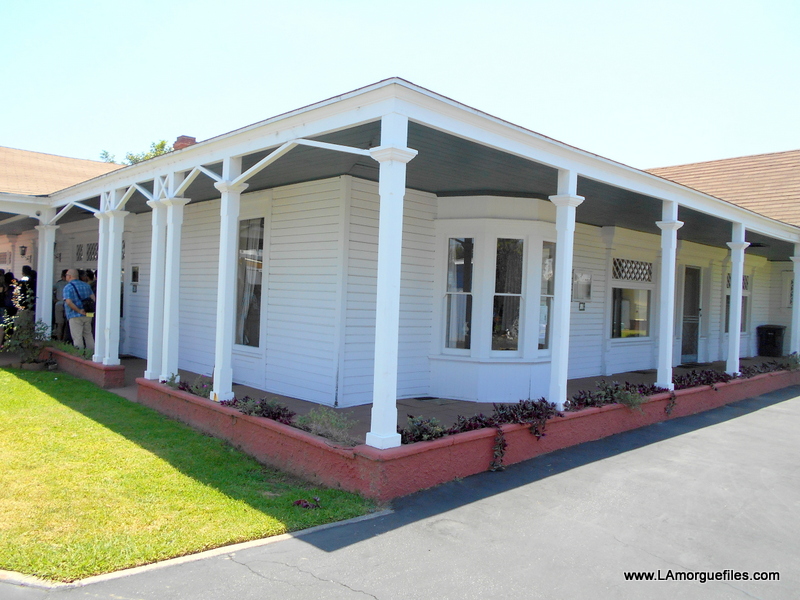
Hannah Chaplin, birth name Hannah Harriet Pedlingham Hill, stage name Lily Harley (August 6, 1865 – August 28, 1928[1]), was an English actress, singer and dancer who performed in British music halls from the age of 16. Chaplin was the mother of Charlie Chaplin and his two half-brothers, the actor Sydney Chaplin and the film director Wheeler Dryden.[2][3] As a result of debilitating illness, now thought to be syphilis, she was unable to continue performing from the mid-1890s. In 1921, she was relocated by her son Charlie to California, where she was cared for in a house in the San Fernando Valley until her death in August 1928.
Early life
Hannah Chaplin was born on August 6, 1865 at 11 Camden Street in the London district of Walworth.[4] Her father, Charles Frederick Hill, the son of a bricklayer, was a shoemaker who may have been of Irish descent. Her mother, Mary Ann Hodges, the daughter of a mercantile clerk, had previously been married to a sign writer who had died in an accident.[4]
Acting career
At the age of 16, Hannah left home to improve her fortunes by becoming an actress. Inspired by Lillie Langtry, one of the most successful female performers of the times, she adopted the stage name Lily Harley, performing as an actress and singer in the music halls.[5] While taking part in an Irish sketch Shamus O'Brien in the early 1880s, she fell for her stage partner Charles Chaplin, attracted by his charm and good looks. Reflecting on this period, Charlie Chaplin described his mother as "divine-looking." He was later told that she had been "dainty and attractive and had compelling charm."[5]
In about 1883, at approximately 18 years, she became involved with Sydney Hawkes (possibly Sidney Hawke) who took her to the South African gold-mining dictrict of Witwatersrand where, according to the psychiatrist Stephen Weissman in his 2008 book Chaplin: A Life, she was forced into prostitution. In 1884, pregnant by Hawkes, she returned to London where she again lived together with Charles Chaplin. In 1885, she gave birth to Sydney, Hawkes' son, and soon returned to the stage, performing at the Royal Music Hall in the northern French city of Le Havre. She married Charles on June 22, 1885 at St John's Church, Walworth.[6]
While there is little record of performances by Charles in the mid-1880s, Hannah Chaplin appeared in Bristol and Dublin in 1885, and in Belfast, Glasgow, Peckham, Aberdeen and Dundee in 1886. Press notices referred to her as "the refined and talented artist Lily Harley" who had been "a most brilliant hit at Gaity and Star, Glasgow, four and five turns every night and heaps of flowers."[5]
Onset of poor health
At the beginning of 1887, Hannah was back in London, where she first commented on her poor state of health. She appeared with her husband that year in Bath and at music halls in the north of England. Despite her illness, she continued to perform in 1888. Her husband became increasingly popular, yet she did not progress in her career. On April 15, 1889, she gave birth to a second child, Charles Spencer Chaplin, now better known as Charlie Chaplin. Hannah's relationship with her husband began to deteriorate, possibly as a result of his drinking or to his touring in North America during the summer of 1890.[5] In the early 1890s, Chaplin became involved with another music hall performer, Leo Dryden with whom she performed for a short period. On August 31, 1892, her third son, Wheeler Dryden was born and for a time the family seems to have lived comfortably in West Square, Southwark. In the spring of 1893, Dryden left, taking his son with him.[7]
In the early 1890s, it appears that Hannah spent time with her sister Kate, also a music hall artist, known on stage as Kitty Fairdale. It appears the two sisters lived together around 1892. Hannah wrote a number of successful songs for her, including "My Lady Friend" and, in particular, "The Lady Judge" which proved to be quite a success from 1893 to 1896.[5]
Hannah's health steadily worsened as she began to suffer from violent migraines. Her condition deteriorated even further when her mother was committed to the London County Asylum after alleged signs of madness, perhaps brought about by drink.[4][6] Hannah Chaplin appears to have joined the Vaudeville corps de ballet at London's Empire Theatre for a time, possibly to nurse her voice. Little is known of her life between 1892 and 1895. There is nevertheless a clear record of the night in 1894 when she lost her voice while performing at the Canteen in Aldershot. Her son Charlie, five years old at the time, sang in her place.[5]
Unable to perform on the stage, Hannah supported her two remaining children by dress-making at home. Charlie Chaplin's biography and other sources report that she was frequently in good spirits, entertaining the children with performances of her earlier stage acts or devising stories herself in the pantomime style. Her headaches continued, becoming so serious that on June 29, 1895, she was admitted to the Lambeth Infirmary where she spent the next month and was readmitted a few months later. The children had to leave home, Charlie eventually ending up in an orphanage.[5]
According to Weissman, who investigated Hannah Chaplin's medical records, she was suffering from syphilis. Documents from 1898 state that she was prone to violent psychotic episodes, typical of the third stage of the disease. Her condition deteriorated so much that when she was 35, she had to be admitted to the Cane Hill Asylum. On her release, she lived together with her sons in an inexpensive room in Kennington. She continued to work as a seamstress and also benefited from some assistance from Charlie's father until he died of cirrhosis of the liver at age 37. Hannah Chaplin was readmitted to hospital two years later, where she continued to experience serious signs of syphilis including "ravings and hallucinations." Her state deteriorated, and her son Charlie could "hardly bear to see her."[6]
Final years
When her son Charlie reached the age of 14, his career began to evolve. His half brother Sydney assisted him in finding work through theatrical agencies. They were soon in a position to assist their mother again, bringing her back home. Her reprieve did not last as was soon sent back to hospital after being found wandering the streets. By the time he was 21, Charlie had earned enough from his performances to travel to the United States where, by 1921, his career was blossoming. His mother's health deteriorated further into a state of dementia. Desperate to see her, he brought her to Hollywood where he was now living with Sydney and his other half brother, Wheeler Dryden.[6] There her sons ensured Hannah Chaplin received round-the-clock care in the new home they had found for her in the San Fernando Valley, California.[6]
Seven years later she died in hospital in Glendale, California, on August 28, 1928, with Charlie at her side.[3][8] She is buried in Hollywood Forever Cemetery.[2][9]
References
1. "Hannah Harriet Pedlingham Chaplin." Geni.
2. "Charlie's Mother: Hannah Chaplin." Charlie Chaplin – Official Website.
3. Weissman, Stephen (13 December 2013). Chaplin: A Life. Skyhorse Publishing Company, Incorporated. pp. 14–. ISBN 978-1-62872-185-0.
4. Robinson, David (2014). Chaplin: His Life And Art. Penguin Books Limited. pp. 22, 162. ISBN 978-0-14-197918-2.
5. Anthony, Barry; Chaplin, Michael (2012). Chaplin's Music Hall: The Chaplins and Their Circle in the Limelight. I.B.Tauris. pp. 30–. ISBN 978-1-78076-314-9.
6. Roberts, Glenys (December 7, 2009). "Revealed: The dark secrets about Charlie Chaplin's mother that fired his genius." Daily Mail.
7. Milton, Joyce (2014). Tramp: The Life of Charlie Chaplin. Open Road Media. pp. 10–. ISBN 978-1-4976-5916-2.
8. Bailey, Stanley (August 29, 1928). "Death Takes Mrs. Chaplin." The Pittsburgh Press.
9. "Life Stories – Hannah Chaplin." Hollywood Forever Cemetery.
The Henry Gage Mansion (1795) Bell Gardens
The oldest remaining house in Los Angeles is the Avila Adobe located on Olvera Street (built in 1818). It is not, however, the oldest remaining house in Los Angeles County. Shane Kimbler, a Bell Gardens history enthusiast, wrote that early colonist Francisco Salvador Lugo and son Antonio María Lugo began construction in 1795 (or 1771?) on what is now known as Casa de Rancho San Antonio or the Henry Gage Mansion. The house is located at 7000 East Gage Avenue in Bell Gardens. It was built to qualify the younger Lugo, a former Spanish colonial soldier, for a land grant from the Spanish crown. In 1810, Antonio María Lugo completed the house and received the grant, naming his new grant Rancho San Antonio. The ranch eventually grew to encompass 29,513 acres (119.43 km2), including what are now the cities of Bell Gardens, Commerce, and parts of Bell, Cudahy, Lynwood, Montebello, South Gate, Vernon and East Los Angeles. When California became part of the U.S. in 1850, Lugo, as did all recipients of Spanish/Mexican land grants, began losing portions of his land to the growing population of Anglo newcomers. The ranch adobe, however, continued to be owned and used by the Lugo family.
By 1865, most of the Lugo ranch, divided among five sons and three daughters, had been sold off for as little as a dollar per acre. The original adobe ranch home, however, remained in the family. In 1880, attorney Henry Tifft Gage, a transplant from Michigan, married one of Lugo’s great granddaughters, Francis "Fanny" Rains. The original adobe ranch home was gifted to Gage as a wedding dowry and it became known as the Gage Mansion. When Gage acquired the mansion he worked very extensively to restore the heritage farmhouse of early Los Angeles. In 1898, Gage was elected to become the 20th governor of California. He served in that office from 1899 to 1903. In 1910, he was appointed by President William Howard Taft to serve as U.S. Minister to Portugal. He resigned after only one year due to his wife’s health problems. Gage lived in the abode ranch house until his death in 1924.
A century later, the Gage Mansion was all that remained of the once great Rancho San Antonio. In 1983, the Casa Mobile Home Park, a cooperative of mobile home owners renting lots on the property, purchased the land and the house from their ailing landlord. Although they were aware of the historical significance of the old house, they had no means of maintaining it. In 1987, then Bell Gardens City Councilwoman Letha Viles began working to get the house listed on the state historical registry, making it eligible for maintenance grants. It is now listed as California Historical Site Number 984.
California Governor Henry Gage 1924 Calvary Cemetery
Henry Tifft Gage (December 25, 1852 – August 28, 1924) was an American lawyer, politician and diplomat. A Republican, Gage was elected to a single term as the 20th governor of California from 1899 to 1903. Gage was also the U.S. Minister to Portugal for several months in 1910.
Biography
Gage was born on Christmas Day, 1852 in Geneva, New York. Relocating with his family to East Saginaw, Michigan, Gage spent his teenage years in Michigan, studying law with his lawyer father. In 1873 at the age of twenty-one, Gage was admitted to the Michigan Bar, working for his father's law practice in East Saginaw for over a year. Over a year later, Gage relocated to California, settling in Los Angeles. Between 1874 and 1877, Gage was a successful sheep dealer, selling sheep to various farms around Los Angeles County.[1] In 1877, Gage returned to law, opening his own practice. Largely successful in court, his practice quickly began to attract a number of prominent corporate clients in Southern California, including the Southern Pacific Railroad, who would enjoy a decades-long relationship with Gage. Three years later, Gage married Francesca V. Rains, a great granddaughter of a Californio family.[2] The Gages settled in Bell Gardens at his wife's family home.
Running as a Republican, Gage was elected as Los Angeles City Attorney in 1881, beginning a slow rise within party ranks. At the 1888 Republican National Convention in Chicago, Gage was chosen as a delegate-at-large during the proceedings. In a speech to the convention, Gage seconded the motion to nominate Levi P. Morton as the party's nomination for the vice presidency.[3]
S.S. Itata in San Diego Bay in 1891.
In 1891, President Benjamin Harrison appointed Gage as a federal prosecutor to prosecute the crew of the Chilean steamer Itata due to the Itata Incident. The U.S. federal government charged the crew with knowingly assisting an illegal arms purchase. Its cargo had consisted of weapons purchased for National Congressional insurgent forces fighting in the 1891 Chilean Civil War against President José Manuel Balmaceda. Upon review of the federal government's case, Gage dropped all charges against Itata's crew, claiming that the government had mistaken the arms purchase as illegal.[1]
By 1898, Gage had become a prominent corporate lawyer within Los Angeles business circles, as well as a successful owner of real estate, particularly the Red Rover gold mine in Acton in the Santa Clarita Valley. At the state Republican convention that year, Gage was nominated in the first round of voting as the party's nomination for the governorship. His nomination was largely orchestrated by the Southern Pacific Railroad, who had worked with Gage since the 1870s, and saw him as supportive of their interests.
In the 1898 state general elections, Gage defeated his Democratic rival, House Representative James G. Maguire by a modest 6.7%.[4] Other minor candidates in the election included Job Harriman of the Socialist Labor Party of America and Prohibitionist J. E. McComas, a former State Senator.
Governorship
Gage was inaugurated as the 20th Governor of California on January 4, 1899. In his inauguration speech, Gage spoke at length about foreign policy, viewing with favor the recent results of the Spanish–American War and their effect on California's economy. "The peaceful acquisition of the Hawaiian Islands, extending our empire beyond our Pacific shore, should be followed as a political necessity by the annexation of the Philippines," Gage spoke. "The center of commerce must move westward. California, favorably situated, will, among other advantages, reap the harvest of trade with these new territories, developing our many varied and growing resources, creating a western merchant marine for the carriage of our imports and exports, and luring to our markets the nations of the world."[5]
In one of his first acts, Gage's administration reopened the State Printing Office, closed down earlier by previous governor James Budd in order to cut governmental expenditures.[5]
From early on in his administration, Gage was highly partisan, due mostly to frequent accusations from Reform Republicans and Democrats alike who accused Gage as being a pawn for the Southern Pacific. When a newspaper published a political cartoon portraying railroad tycoon Collis Potter Huntington leading the governor around on a leash, Gage was so incensed by the accusation that he ramrodded a censorship bill through the California State Legislature, restricting the press whenever editorial content involved politics or politicians.[6]
San Francisco bubonic plague outbreak
From 1900 onwards, Gage's administration was often rocky. That year, the ship Australia laid anchor in the Port of San Francisco, unknowingly bringing to the city rats carrying the Third Pandemic of the bubonic plague.[7] The disease soon made home in the cramped ghetto quarters of the city's Chinatown. Rumors of the plague's presence abounded in the city, quickly gaining the notice of authorities from the federal Marine Hospital Service stationed on Angel Island, including the Marine Hospital Service's head in San Francisco, Joseph J. Kinyoun.[8][9][10]
Allied with powerful railroad and city business interests, Gage publicly denied that any pestilence outbreak in the city, fearing that any word of the bubonic plague's presence would deeply damage the city and state's economy. Supportive newspapers, such as the San Francisco Call, San Francisco Chronicle and the San Francisco Bulletin, echoed Gage's denials, beginning what was to become an intense defamation campaign against Joseph Kinyoun, director of the San Francisco Quarantine Station. In response to the state's refuting of the plague's existence, U.S. Surgeon General Walter Wyman recommended to federal Treasury Secretary Lyman J. Gage to intervene. Secretary Gage agreed, creating a three-man medical commission to medically investigate the city. The commission conclusively discovered that bubonic plague was present.
Like Kinyoun, the Treasury commission's findings were again immediately denounced by Governor Gage. Gage believed the federal government's growing presence in the matter was a gross intrusion of what he recognized as a state concern. In his retaliation, Gage denied the federal commission any use of the University of California, Berkeley's laboratories to further study the outbreak.[11] The Bulletin would also attack the federal commission, branding it as a "youthful and inexperienced trio."
The clash between Gage and federal authorities intensified. Surgeon General Wyman instructed Kinyoun to place Chinatown under quarantine, as well as blocking all East Asians from entering state borders. Chinese residents, supported by Gage and local businesses, fought the quarantine through numerous federal court battles, claiming the Marine Hospital Service was violating their rights under the Fourteenth Amendment, and in the process, launched lawsuits against Kinyoun.[11] In these court proceedings, residents insisted Gage was correct in his denials of the plague outbreak. The courts initially agreed that Chinatown residents were correct in that the quarantine violated their civil rights, yet most of these lawsuits were eventually thrown out of court on later dates.
Between 1901 and 1902, the plague outbreak continued to worsen. In an 1901 address to both houses of the California State Legislature, Gage accused federal authorities, particularly Kinyoun, for injecting bubonic plague into cadavers.[12] In response to what he said to be massive scaremongering by the Marine Hospital Service, Gage pushed a censorship bill through the Legislature to gag any media reports of plague infection. The legislation failed, yet laws to gag reports amongst the medical community succeeded in passage and were signed into law by the governor. In addition, $100,000 was allocated to a public campaign led by Gage to deny the plague's existence. Privately, however, Gage sent a special commission to Washington, consisting of Southern Pacific, newspaper and shipping lawyers to negotiate a settlement with the Marine Hospital Service, whereby the federal government would remove Kinyoun from San Francisco with the promise that the state would secretly cooperate with the Marine Hospital Service in stamping out the plague outbreak.[12]
Despite the secret agreement allowing for Kinyoun's removal, Gage went back on his promise of assisting federal authorities and continued to obstruct their efforts for study and quarantine. A report issued by the State Board of Health on September 16, 1901, bolstered Gage's claims, denying the plague's outbreak.[13]
Labor agitation
As Gage fought his growing battle with the federal government, labor agitation was starting to spill over along the San Francisco waterfront. In the July 1901, members of the International Brotherhood of Teamsters went on strike, protesting against recent orders to haul luggage for a non-unionized cargo company. The Teamsters strike was quickly joined by sympathizing sailors, stevedores and fireman belonging to the City Front Federation. Between 10,000 and 16,000 men joined the strike.[14]
Employers grew quickly frustrated with the strikers, asking for San Francisco Mayor James D. Phelan to request Gage in ordering in the state militia to crush the strike. Phelan refused, though violence between strikers and officers of the San Francisco Police Department began to break out in September.
Gage became increasingly concerned that violence along San Francisco's waterfront was spilling out of the city's control. On one instance, in order to reassure himself that violence was not increasing, Gage disguised himself as a striker and walked amongst the stevedores to observe conditions personally.[6] In October, Gage negotiated settlement with employers and the Teamsters, though the terms of the settlement were never made publicly known. Gage was the first California governor to negotiate an end to a labor strike.
End of administration
Gage's troubles over the bubonic plague continued to worsen. Despite San Francisco-based newspapers continual denials, contradicting reports from the Sacramento Bee and the Associated Press on the plague's spread had made the outbreak become publicly known throughout the United States. The state governments of Colorado, Texas and Louisiana passed quarantines of California, arguing that since the state had refused to admit a health crisis within its borders, states receiving rail or shipping cargo from California ports of call had the duty to protect themselves.[12] Threats of a national quarantine grew.
As the 1902 general elections approached, Southern Pacific supporters increasingly saw Gage, a man who had represented their interests since his days as a Los Angeles-based lawyer, as an embarrassment to state Republicans. Gage's public denials of the plague outbreak were due to protecting the state's economy and the business interests of his political allies.[12] However, instead of putting allegations of the outbreak to rest, conflicting studies and reports from federal officials and the media continued to prove Gage incorrect. In turn, Gage's denials were creating economic headaches to shipping and rail companies within the state and throughout the country, who now faced quarantine and economic boycotts from other states.
At the state Republican convention that year, the Railroad Republican faction refused Gage renomination for the governorship. In his place, former Mayor of Oakland George Pardee, a German-trained medical physician, received the nomination. Pardee's nomination was largely a compromise between the Railroad and the growing progressive-minded Reform factions of the party.
In his final speech to the California State Legislature in early January 1903, Gage continued to publicly deny the outbreak, blaming the federal government, in particular Joseph Kinyoun, the Marine Hospital Service and the San Francisco Board of Health, for damaging the state's economy.[15]
Post governorship
After leaving Sacramento, Gage returned to Los Angeles to resume his law practice. In 1909, President William Howard Taft appointed Gage as U.S. Minister to Portugal. Gage served in Lisbon for a little more than five months until November 1910. Political instability in Portugal, due to the Revolution of 1910 that deposed King Manuel II, as well as his wife's deteriorating health, forced Gage to submit his resignation to the U.S. Department of State and President Taft. He returned to California shortly afterwards.
Gage died in Los Angeles on August 28, 1924, at the age of 71. He is interred at Calvary Cemetery in East Los Angeles.
Legacy
Despite his administration being characterized by historians as both rocky and incompetent, a lasting legacy of Gage's tenure of office was his signing off on the establishment of the California Polytechnic State University in 1901.
In 1902, Gage appointed Ulysses S. Webb as California Attorney General. Webb became one of the most successful, longest-serving attorneys general in the history of California.
Gage Avenue in Los Angeles was named after him on October 28, 1929. Henry T. Gage Middle School, also located on Gage Avenue, is named after the governor.
The Gage Mansion located in Bell Gardens is now the oldest remaining home in Los Angeles County and is a registered California State Historical Site.[2]
References
1. Melendy, H. Brett and Benjamin F. Gilbert (1965). The Governors of California. Georgetown, Calif.: Talisman Press.
2. "Gage Mansion - Oldest Remaining Home in Los Angeles County". LA Almanac. 2006.
3. "Gov. Henry T. Gage: Biographical Information.". Santa Clarita Valley Historical Society. July 2001.
4. "November 8, 1898 General Election Results". JoinCalifornia.org. 1898-11-08.
5. Henry Gage (January 9, 1907). "Inaugural Address". The Governors' Gallery. California State Library.
6. "Henry Gage 1899 - 1903". The Governors' Gallery. California State Library. 2012.
7. Chase, Marilyn (2003). The Barbary Plague: The Black Death in Victorian San Francisco. Random House. ISBN 0-375-50496-6.
8. "On The Plague In San Francisco". Journal of the American Medical Association. Chicago: The American Medical Association. 36 (15): 1042. April 13, 1901. doi:10.1001/jama.1901.52470150038003.
9. "The Plague, "American Medicine", and the "Philadelphia Medical Journal".". Occidental Medical Times. San Francisco. 15: 171–179. 1901.
10. "Bubonic Plague At San Francisco, Cal.". Annual Report of the Supervising Surgeon General of the Marine Hospital Service of the United States for the Fiscal Year 1901. Washington: Government Printing Office: 491. 1901.
11. Echenberg, Myron (2007). Plague Ports: The Global Urban Impact of Bubonic Plague: 1894-1901. Sacramento: New York University Press. ISBN 0-8147-2232-6.
12. "Public Health Politics and the San Francisco Plague Epidemic of 1900-1904" (PDF). Mark Skubik, San Jose State University. 2002.
13. California State Board of Health (1901). Report of the Special Health Commissioners Appointed by the Governor to Confer with the Federal Authorities at Washington Respecting the Alleged Existence of Bubonic Plague in California (1 ed.). Sacramento: Superintendent State Printing.
14. "Inventory of the Peter Comacho Papers, 1904-1959". San Francisco State University, Labor Archives and Research Center. 2007.
15. "Conclusion: Public Health Politics and the San Francisco Plague Epidemic of 1900-1904" (PDF). Mark Skubik, San Jose State University. 2002.
Sunday, August 27, 2017
William Morris Agent Abe Lastfogel 1984 Hillside Cemetery
Abraham Isaac "Abe" Lastfogel (May 17, 1898 - August 27, 1984) was one of the first employees and a long-time President of the William Morris Agency, a large diversified talent agency.[1]
Early life
Abe was the seventh son of "a Yiddish-speaking animal skinner who had fled Russia in 1889 to escape the pogroms and found work in the Gansevoort Street meatpacking district by the docks of the Lower West Side. Born in 1898, the boy had grown up in a cold-water flat on East Forty-ninth Street... He was a scappy kid, compact and solidly built..."[2]:34
Career
The William Morris Agency hired Abe Lastfogel in 1912 as an office boy. Finding success in the rapidly growing firm, Lastfogel ultimately moved to Hollywood in 1932 to manage WMA's Los Angeles office. He was Chairman of William Morris[3] while William Morris Jr., served as President.
During World War II, Lastfogel served as President of the USO-Camp Shows,[4] which produced wartime entertainment events featuring more than 7,000 performers—including Humphrey Bogart, James Cagney, Gary Cooper, Bing Crosby, Dinah Shore and James Stewart—seen by audiences of soldiers, sailors, airmen and marines around the world estimated to total two hundred million.[2]:82[5] [6]
Personal life
In 1927, Lastfogel married Frances Arms, a former vaudeville performer. They had no children.[3]
Abe Lastfogel died of a heart attack in 1984[7] at Cedars-Sinai Medical Center in Los Angeles and was interred in the Hillside Memorial Park Cemetery.
References
1. "Abe Lastfogel, Agent, Dead; A William Morris Executive". The New York Times. 27 August 1984.
2. Rose, Frank (1996). The Agency: William Morris and the Hidden History of Show Business (1st pbk. ed.). New York: HarperBusiness. ISBN 978-0-887-30807-9. OCLC 37128759.
3. Buckley, Tom (3 December 1973). "William Morris Agency Marks 75 Years of 10% vaudeville headliner when". The New York Times. pp. 77, 85.
4. "USO Camp Show Head Back from England: Lastfogel Arrives on Clipper After Entertainment Survey". The New York Times. 17 December 1942. p. 42.
5. Kahn, Jr., E. J. (20 April 1946). "The Quiet Guy in Lindy's". The New Yorker. p. 35.
6. Kahn, Jr., E. J. (27 April 1946). "The Quiet Guy in Lindy's II". The New Yorker. p. 27.
7. "Abraham Lastfogel - United States Social Security Death Index". FamilySearch.
Further reading
Rose, Frank. The Agency: William Morris and the Hidden History of Show Business. New York: HarperCollins, 1995. ISBN 978-0-887-30807-9 OCLC 37128759
Saturday, August 26, 2017
"The Great Waltz" Actress & Opera Singer Miliza Korjus 1980 Westwood Village Cemetery
Miliza Elizabeth Korjus [militsa] (August 18, 1909 – August 26, 1980) was a Polish and Estonian coloratura soprano opera singer, who later appeared in Hollywood films. She was nominated for the Academy Award for Best Supporting Actress in 1938 for her performance in The Great Waltz.
Early life
She was born in Warsaw, Poland, (then part of the Russian Empire) the daughter of Anna (née Gintowt) and Artur Korjus, an Estonian lieutenant colonel in the Imperial Russian Army and later Chief of Staff to the War Minister of Estonia. Her mother was descended from the Lithuanian-Polish nobility. She was born during her father's military posting there in 1909; later the family moved to Moscow. She was the fifth of six children (she had one brother, and four sisters). Her mother and father separated during the Russian Revolution of 1917 and in 1918 she moved from Moscow to Kiev with her mother and sisters, where she began her musical training.
Career
As a teenager, Korjus toured the Soviet Union with the Dumka Choir. In 1927, while performing in Leningrad, she managed to cross the border into Estonia, where she was reunited with her father. She then began touring the Baltic countries and Germany, and, in 1929, married Kuno Foelsch, a physicist. Korjus continued her concert career as a soprano in Germany and was eventually engaged by the Berlin State Opera in 1933. Her operatic appearances and recordings quickly propelled her to the forefront of European singers and earned her the nickname "The Berlin Nightingale." Film producer Irving Thalberg heard her recordings and signed her to a ten-year film contract, sight unseen.
Korjus' first Hollywood film was The Great Waltz (1938), which Frank Nugent of the New York Times called "a showcase for Miliza Korjus" while also noting her resemblance to Mae West.[1] She was nominated for the Academy Award for Best Supporting Actress for the role.
Korjus was scheduled to star in a film version of the novel Sandor Rozsa in 1940, but an automobile accident caused her leg to be crushed, and, although she avoided amputation, she required extensive recuperation, causing the film to be cancelled.
By 1941 she had healed well enough to begin a tour of South America. During her tour, the United States became involved in World War II, and she decided to stay in Mexico for the duration. While living there, she made a Spanish language film, Caballería del Imperio.
In 1944, Korjus returned to the United States, where she performed at Carnegie Hall. She toured the country for several more years, eventually settling in Los Angeles, California. She later founded Venus Records to release many of her earlier recordings.[1]
Personal life
In 1952, she married Walter Shector, a physician, and retired from the concert stage, preferring to concentrate on making records. She died of heart failure in 1980 at Culver City, California, USA and was interred in the Westwood Village Memorial Park Cemetery in Los Angeles.
Korjus’ daughter Melissa F. Wells was born in Estonia in 1932 and for over forty years was a career officer of the US foreign service. Notably, she served as US Ambassador to Estonia between 1998-2001.
Recordings
Miliza Korjus Collector's Edition: 4-CD set issued by Korjus Recordings. Contains all digitally re-mastered recordings made in Europe and USA, plus live concert performances. Ordering information can be found at the Official Website for Miliza Korjus Miliza Korjus I: arias and excerpts from Die Zauberflöte, Le toréador, La zingara, Lucia di Lammermoor, Ernani, Rigoletto, I vespri siciliani, Mireille, Dinorah, The Tales of Hoffmann, Lakmé, Sadko, The Tsar's Bride, The Golden Cockerel, Proch: Tema e variazioni, CD 89054 (Preiser Lebendige Vergangenheit)
Miliza Korjus II: arias and excerpts from Die Entführung aus dem Serail, The Barber of Seville, Rigoletto, Lakmé, also songs by Delibes, Moszkowski, Weber, Chopin, Johann Strauss II, Alyabyev, Arditi, Denza, Rossini, Taubert, Muller, Mackeben, CD 89169 (Preiser Lebendige Vergangenheit)
Miliza Korjus III: arias and excerpts from works by Johann Strauss II, Mozart, Bellini etc. CD 896795 (Preiser Lebendige Vergangenheit)
Miliza Korjus - The Berlin Nightingale CD 727031918622 (Pearl)
References
1. Obituary, New York Times, September 1, 1980.
Subscribe to:
Posts (Atom)