Saturday, April 26, 2014

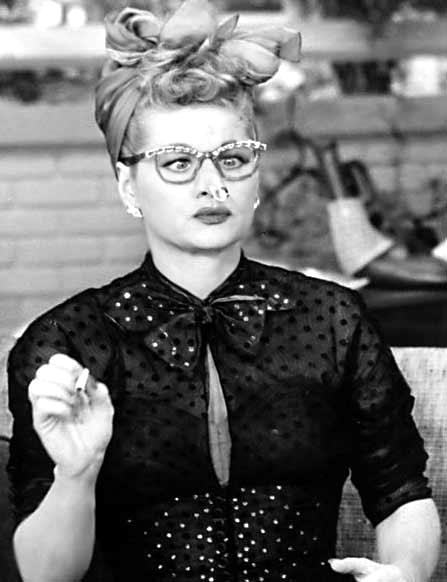
Comedian, Actress, TV Executive Lucille Ball Dies at Cedars 1989

Lucille Désirée Ball (August 6, 1911 – April 26, 1989) was an American comedienne, film, television, stage and radio actress, model, film and television executive, and star of the sitcoms I Love Lucy, The Lucy-Desi Comedy Hour, The Lucy Show and Here's Lucy.

One of the most popular and influential stars in America during her lifetime, with one of Hollywood's longest careers, especially on television, Ball was acting in the 1930s, becoming a B-movie star in the 1940s and a television star in the 1950s. She was still making films in the 1960s and 1970s. She was a radio actress during the 1940s, as well.


Ball received thirteen Emmy Award nominations and four wins. She was the recipient of the Golden Globe Cecil B. DeMille Award in 1979, the Lifetime Achievement Award from the Kennedy Center Honors in 1986 and the Governors Award from the Academy of Television Arts & Sciences in 1989.

In 1929, Ball landed work as a model and later began her performing career on Broadway using the stage name Dianne Belmont. She appeared in many small movie roles in the 1930s as a contract player for RKO Radio Pictures. Ball was labeled as the "Queen of the Bs" (referring to her many roles in B-films).

In 1951, Ball was pivotal in the creation of the television series I Love Lucy. The show co-starred her then husband, Desi Arnaz as Ricky Ricardo and Vivian Vance and William Frawley as Ethel and Fred Mertz, the Ricardos' landlords and friends.

After the show ended in 1957, Ball went on to star in two more successful television series: The Lucy Show, which ran on CBS from 1962 to 1968, and Here's Lucy from 1968 to 1974. Her last attempt at a television series was a 1986 show called Life with Lucy. The show proved to be a critical and commercial flop which was canceled less than two months into its run by ABC.


Ball met and eloped with Cuban bandleader Desi Arnaz in 1940. On July 17, 1951, almost 40 years old, Ball gave birth to their first child, Lucie Désirée Arnaz. A year and a half later, Ball gave birth to their second child, Desiderio Alberto Arnaz IV, known as Desi Arnaz, Jr. Ball and Arnaz divorced on May 4, 1960.

On April 26, 1989, Ball died of a dissecting aortic aneurysm, aged 77. At the time of her death, she had been married to her second husband, standup comedian and business partner Gary Morton, for twenty-eight years.

Death

On April 18, 1989, Ball complained of chest pains and was rushed to the emergency room of Cedars-Sinai Medical Center. She was diagnosed as having a dissecting aortic aneurysm and underwent heart surgery for nearly eight hours. The surgery was successful, and Ball began recovering, even walking around her room with little assistance. On April 26, shortly after dawn, Ball awoke with severe back pains. Her aorta had ruptured in a second location and Ball quickly lost consciousness. All attempts to revive her proved unsuccessful, and, at approximately 05:47 PST, she died. She was 77 years old.

Her cremated remains were initially interred in Forest Lawn – Hollywood Hills Cemetery in Los Angeles, but in 2002 her children moved her ashes to the family plot at Lake View Cemetery in Jamestown, New York, where Ball's mother, father, brother, and grandparents are buried.


Lucille Ball's former vault is in the Columbariam of Radiant Dawn on the same wall as "Cool Hand Luke" character actor Strother Martin.

Lucy was in the left vault of the two vacancies (see photos above) down and to the right of Strother.


Burlesque Entertainer Gypsy Rose Lee 1970 Inglewood Park Cemetery

Queen of Burlesque Gypsy Rose Lee Buried in Inglewood
Gypsy Rose Lee (born January 8, 1911 – April 26, 1970) was an American burlesque entertainer, famous for her striptease act. She was also an actress and writer, whose 1957 memoir, written as a monument to her mother, was made into the stage musical and film Gypsy.

Natalie and Gypsy
Gypsy was born Rose Louise Hovick in Seattle, Washington in 1911, although her mother later shaved three years off both of her daughters' ages. She was initially known by her middle name, Louise. Her mother, Rose Thompson Hovick, married John Olaf Hovick, who was a newspaper advertising salesman. Her sister, Ellen June Hovick (better known as actress June Havoc), was born in 1913.

After their parents divorced, the girls earned the family's money by appearing in vaudeville where June's talent shone, while Louise remained in the background. At the age of 13, June married a boy in the act named Bobby Reed. June left the act and went on to a brief career in marathon dancing before giving birth to April Reed around 1930.


Louise's singing and dancing talents were insufficient to sustain the act without June. Eventually, it became apparent that Louise could make money in burlesque, which earned her legendary status. Her innovations were an almost casual strip style, compared to the herky-jerky styles of most burlesque strippers (she emphasized the "tease" in "striptease") and she brought a sharp sense of humor into her act as well. She became as famous for her onstage wit as for her strip style, and—changing her stage name to Gypsy Rose Lee—she became one of the biggest stars of Minsky's Burlesque, where she performed for four years. She was frequently arrested in raids on the Minsky brothers' shows.

She eventually traveled to Hollywood, where she was billed as Louise Hovick. Her acting was generally panned, so she returned to New York City and invested in film producer Michael Todd. She eventually appeared as an actress in many of his films.

Queen of Burlesque Gypsy Rose Lee Buried in Inglewood
Trying to describe what Gypsy was (a "high-class" stripper), H. L. Mencken coined the term ecdysiast. Her style of intellectual recitation while stripping was spoofed in the number "Zip!" from Rodgers and Hart's Pal Joey, a play in which her sister June appeared. Gypsy can be seen performing an abbreviated version of her act (intellectual recitation and all) in the 1943 film Stage Door Canteen.

In 1941, Gypsy Rose Lee authored a mystery thriller called The G-String Murders which was made into the 1943 film Lady of Burlesque starring Barbara Stanwyck. While some assert this was in fact ghost-written by Craig Rice, there are also those who suggest that there is more than sufficient written evidence in the form of manuscripts and Lee's own correspondence to prove she wrote a large part of the novel herself under the guidance of Rice and others, including her friend and mentor, the editor George Davis. Lee's second murder mystery, Mother Finds a Body, was published in 1942.

Queen of Burlesque Gypsy Rose Lee Buried in Inglewood

While she worked at Minsky's, Gypsy Rose Lee had relationships with an assortment of characters from comedian Rags Ragland to Eddy Bruns. In Hollywood, she married Arnold "Bob" Mizzy on August 25, 1937, at the insistence of the film studio. Gypsy was at one time in love with Michael Todd, and in 1942, in an attempt to make him jealous, she married William Alexander Kirkland. They divorced in 1944. While married to Kirkland, she gave birth to a son fathered by Otto Preminger; he was named Erik Lee and has been known successively as Erik Kirkland, Erik de Diego and Erik Preminger. Gypsy Lee was married for a third time in 1948 to Julio de Diego, but they also eventually divorced.

Gypsy and June, who also became successful in performance, continued to get demands for money from their mother, who had opened a lesbian boarding house in a ten-room apartment on West End Avenue in New York City. This property and a farm in Highland Mills, New York, had been rented for Mother Rose by Gypsy Lee. Mother Rose shot and killed one of her guests (according to Erik Preminger, she killed her own lover, who had made a pass at Gypsy) at the boardinghouse. This incident was explained as a suicide.

Mother Rose died in 1954 of colon cancer.

With their mother dead, the sisters now felt free to write about her without risking a lawsuit. Gypsy's memoirs, titled Gypsy, were published in 1957 and were taken as inspirational material for the Jule Styne, Stephen Sondheim, and Arthur Laurents musical Gypsy: A Musical Fable. June Havoc didn't like the way she was portrayed in the piece, but she was eventually persuaded (and paid) not to oppose it for her sister's sake. The play and the subsequent movie deal assured Gypsy a steady income. The sisters became estranged. June, in turn, wrote Early Havoc and More Havoc, relating her version of the story.

Gypsy Rose Lee went on to host a morning San Francisco KGO-TV television talk show, Gypsy. She was diagnosed in 1969 with metastatic lung cancer, which prompted her to reconcile with June before her death. "This is my present, you know," she reportedly told June, "my present from Mother."

The walls of her Los Angeles home were adorned with pictures by Joan Miró, Pablo Picasso, Marc Chagall, Max Ernst and Dorothea Tanning, all of which were reportedly gifts to her by the artists themselves. Like Picasso, she was a supporter of the Popular front movement in the Spanish Civil War and raised money for charity to alleviate the suffering of Spanish children during the conflict.

She also founded one of the first kennels dedicated to breeding Chinese Crested dogs in the U.S, 'Lee', which was sold after her death to Mrs. Ida Garrett and Deborah Woods.

Queen of Burlesque Gypsy Rose Lee Buried in Inglewood
Gypsy Rose Lee died of lung cancer in Los Angeles in 1970. She is buried in Inglewood Park Cemetery in Inglewood, California.

Queen of Burlesque Gypsy Rose Lee Buried in Inglewood

Friday, April 25, 2014

Character Actor Anthony Merlo 1976 Hollywood Forever Cemetery

Anthony Merlo, Actor
Date of Birth
1 October 1886, Italy

Date of Death
25 April 1976, Woodland Hills, Los Angeles, California, USA

Actor Anthony Merlo is entombed in the Abbey of the Psalms Mausoleum at Hollywood Forever Cemetery.


Filmography:

Let's Dance (1950) (uncredited) .... Minor Role
House of Strangers (1949) (uncredited) .... Bit Role
The Saxon Charm (1948) (uncredited) .... Guest at Mexican Inn
Till the Clouds Roll By (1946) (uncredited) .... Critic
O.S.S. (1946) (uncredited) .... Reynal
The Amazing Mrs. Holliday (1943) (uncredited) .... Party Waiter
The Big Street (1942) (uncredited) .... Mug at Mindy's
So Ends Our Night (1941) (uncredited) .... Waiter
North West Mounted Police (1940) (uncredited) .... Half-breed archer
Arise, My Love (1940) (uncredited) .... Italian Correspondent
Dance, Girl, Dance (1940) (uncredited) .... Headwaiter
The Housekeeper's Daughter (1939) (uncredited) .... Gangster
In Name Only (1939) (uncredited) .... Waiter at Tony's
Chasing Danger (1939) (uncredited) .... Capt. Mordont
Cafe Society (1939) (uncredited) .... Headwaiter
Topper Takes a Trip (1938) (uncredited) .... Waiter
Artists and Models Abroad (1938) (uncredited) .... Kitchen Helper
Secrets of a Nurse (1938) (uncredited) .... Waiter
The Spider's Web (1938) (uncredited) .... Chauffeur [Ch. 8]
Arsène Lupin Returns (1938) (uncredited) .... Party Guest
Love Under Fire (1937) (uncredited) .... Guard
The Lady Escapes (1937) (uncredited) .... Reporter
Let Them Live (1937) (uncredited) .... Doctor
Breezing Home (1937) (uncredited) .... Waiter
Champagne Waltz (1937) (uncredited) .... Headwaiter
Charlie Chan at the Opera (1936) (uncredited) .... Villager in Opera
Ladies in Love (1936) (uncredited) .... Assistant Stage Manager
Two in a Crowd (1936) (uncredited) .... Waiter
Under Two Flags (1936) (uncredited) .... Catouche
Desire (1936) (uncredited) .... Hotel Room Service Waiter
The Lone Wolf Returns (1935) (uncredited) .... Waiter
Charlie Chan in Shanghai (1935) (uncredited) .... Ship's Waiter
This Is the Life (1935) (uncredited) .... Waiter
Love Me Forever (1935) (uncredited) .... Minor Role
Hold 'Em Yale (1935) (uncredited)
Les misérables (1935) (uncredited) .... Gendarme
Let's Live Tonight (1935) .... Waiter
Enter Madame (1935) (uncredited) .... Ship's Officer
Secret of the Chateau (1934) (uncredited) .... Arthur
Broadway Bill (1934) (uncredited) .... Barber
Blind Date (1934) (uncredited) .... Waiter
Shoot the Works (1934) .... Headwaiter
Whirlpool (1934) (uncredited) .... Waiter
Coming-Out Party (1934) (uncredited) .... Waiter
Man's Castle (1933) (uncredited) .... Waiter
... aka "A Man's Castle" - USA (review title)
Thru Thin and Thicket; or, Who's Zoo in Africa (1933)
... aka "Thru Thin and Thicket" - USA (short title)
Love Me Tonight (1932) (uncredited) .... Hatmaker
Shanghai Rose (1929) (as Anthony Merlo) .... Ivan Kahn
Greater Than a Crown (1925) (as Anthony Merlo) .... King Danilo
Broken Hearts of Broadway (1923) (as Anthony Merlo) .... Tony Guido
The Thief (1920) (as Anthony Merlo) .... Long's Valet
Atonement (1919) (as Anthony Merlo) .... James Proctor
Phil-for-Short (1919) .... Clifford Brown
The Unveiling Hand (1919) (as Anthony Merlo) .... Hassan
Mandarin's Gold (1919) .... Bertie Standish
Heart of Gold (1919) (as Anthony Merlo) .... Harry Collins
The Sea Waif (1918) (as Anthony Merlo) .... Phil Warren
Just Sylvia (1918) (as Annthony Merlo) .... Frank Hayward
Neighbors (1918) (as Anthony Merlo) .... Undetermined Role
Tinsel (1918) (as Anthony Merlo) .... Dickey Flemming
The Soul of Buddha (1918) (as Anthony Merlo) .... M. Romaine
The Cross Bearer (1918) (as Anthony Merlo) .... Lt. Maurice Lambeaux
A Daughter of France (1918) (as Anthony Merlo) .... Paul de Ciron
More Truth Than Poetry (1917) (as Anthony Merlo) .... Louis Barrentos
A Maid of Belgium (1917) (as Anthony Merlo) .... Dr. Thorn
The Eternal Sin (1917) (as Anthony Merlo) .... Petrucci
The Black Butterfly (1916) (as Anthony Merlo) .... Girard
Seventeen (1916) (as Anthony Merlo) .... Mr. Baxter
The Narrow Path (1916) (as Anthony Merlo) .... Joseph Abrams
... aka "The Danger Path" - USA (alternative title)
A Knight of the Night (1916)
The Fool (1916)
The Heart Wrecker (1916)
Behind the Secret Panel (1916)
The Scarlet Mark (1916)
The Devil's Image (1916)
The Limousine Mystery (1916)
The Unconventional Girl (1916)

Second Unit Director or Assistant Director:

The White Moll (1920) (assistant director) (as Anthony J. Merlo)

Cinematographer:
Is Any Girl Safe? (1916) (unconfirmed) (as Anthony Merlo)

Actress & Dancer Ginger Rogers 1995 Oakwood Cemetery


Ginger Rogers (July 16, 1911 – April 25, 1995) was an American actress, dancer, and singer who appeared in film, and on stage, radio, and television throughout much of the 20th century.


During her long career, she made a total of 73 films, and is noted for her role as Fred Astaire's romantic interest and dancing partner, in a series of ten Hollywood musical films that revolutionized the genre. She also achieved great success in a variety of film roles, and won the Academy Award for Best Actress for her performance in Kitty Foyle (1940). She ranks #14 on the AFI's 100 Years…100 Stars list of actress screen legends.


In 1977, Rogers's mother died. Rogers remained at the 4-Rs (Rogers's Rogue River Ranch) until 1990, when she sold the property and moved to nearby Medford, Oregon. Her last public appearance was on March 18, 1995 when she received the Women's International Center (WIC) Living Legacy Award.

For many years, Rogers regularly supported, and held in-person presentations, at the Craterian Theater, in Medford, Oregon, where she had performed in 1926 as a vaudevillian. The theater was comprehensively restored in 1997, and posthumously renamed in her honor, as the Craterian Ginger Rogers Theater.


Rogers would spend winters in Rancho Mirage and summers in Medford. She died in Rancho Mirage on April 25, 1995 of congestive heart failure at the age of 83. She was cremated; her ashes are interred in the Oakwood Memorial Park Cemetery in Chatsworth, California, with Lela's, and just a short distance from the grave of Fred Astaire.


She was a lifelong conservative and a member of the Republican Party.

She was also a Christian Scientist.

"The Doors" Jim Morrison Wife Pam Courson Overdoses on L.A. Couch 1974


Pamela Susan Courson (December 22, 1946 – April 25, 1974) was the long-term companion of Jim Morrison, vocalist of The Doors. After the deaths of Morrison and Courson, her parents petitioned an out-of-state court to declare that the couple had a common law marriage.

Early life and involvement with Morrison

Courson was born in Weed, California. She was described as a reclusive young girl from a family that didn't mix with the neighbors very much. She did well in school until junior high, when records show that her family was contacted about truancy. Courson hated high school, and her grades declined when she was sixteen. She did not return to Orange High School for her senior year, instead attending Capistrano Valley High School. That spring, she left for Los Angeles, where she and a friend got an apartment. It has been rumored[1] (and denied) that Neil Young wrote the song "Cinnamon Girl" about her. One biography states that she and Morrison met at a nightclub called The London Fog on the Sunset Strip in 1965, while Courson was an art student at Los Angeles City College. In his 1998 memoir, Light My Fire: My Life with the Doors, former keyboardist Ray Manzarek stated that Courson and a friend saw the band during their stint at the London Fog, a lesser-known nightclub, and that she was initially courted by Arthur Lee, of the Californian band Love, who brought The Doors to the attention of Elektra Records boss Jac Holzman.

Courson's relationship with Morrison was tumultuous, with repeated sexual excursions by both partners. Courson briefly operated Themis, a fashion boutique that Morrison bought for her.[2] Her death certificate lists her occupation as "women’s apparel."

Deaths of Morrison and Courson

On July 3, 1971, Courson found Morrison dead in the bathtub of their apartment in Paris, France. The official coroner's report listed his cause of death as heart failure, although no autopsy was performed. Questions persist over the actual cause of death. Under Morrison's will, which stated that he was "an unmarried person," Courson inherited his entire fortune. Lawsuits against the estate would tie up her quest for inheritance for the next two years. Courson did not remain in contact with the remaining Doors members after she received her share of Morrison's royalties.

After Morrison's death, Courson became a recluse, using heroin and showing signs of mental instability. On April 25, 1974, she died of a heroin overdose on the living room couch at the Los Angeles apartment she shared with two male friends. A neighbor said she had talked about looking forward to seeing Jim again soon. Her parents intended that she be buried next to Morrison at Père Lachaise Cemetery in Paris, and they listed this location as the place of burial on her death certificate, but due to legal complications with transporting the body to France, her remains were buried at Fairhaven Memorial Park in Santa Ana, California, under the name "Pamela Susan Morrison." After her death, her parents — Columbus and Penny Courson — inherited Morrison's fortune, but Morrison's parents later contested their executorship of the estate.

Estate controversy

In his will, made in Los Angeles County on February 12, 1969, Morrison left his entire estate to Courson, also naming her co-executor with his attorney, Max Fink.

When Courson died, a battle ensued between Morrison's and Courson's parents over who had legal claim to Morrison's estate. On his death, his property became Courson's; on her death, her property passed to her next heirs at law, her parents. Morrison's parents contested the will under which Courson and subsequently her parents had inherited their son’s property.

To bolster their positions, Courson’s parents presented an unsigned document that they claimed Pam Courson had acquired in Colorado, apparently an application for a declaration that she and Morrison had contracted a common-law marriage under the laws of that state. The ability to contract a common-law marriage was abolished in California in 1896, but the state's conflict of laws rules provided for recognition of common-law marriages lawfully contracted in foreign jurisdictions. Colorado was one of the 11 U.S. jurisdictions that still recognized common-law marriage. As long as a common-law marriage was lawfully contracted under Colorado law, it was recognized as a marriage under California law. However, neither Morrison nor Courson had signed the document, nor was there any proof that either of the deceased had even been aware of the document's existence. Neither Morrison nor Courson was ever a resident of Colorado.

Whatever the circumstances of the unsigned document, the court case, and the controversy surrounding it, the California probate court decided that Courson and Morrison had a common-law marriage under the laws of Colorado. The effect of the court ruling was to close probate of Morrison's and Courson's estates and to reinforce the Courson family's hold on the inheritance.

 
Fictional portrayals

Courson was portrayed by Meg Ryan in Oliver Stone's 1991 film, The Doors.[3]

References

1.^ Davis, Stephen. Jim Morrison: Life, Death, Legend. New York: Gotham, 2005. ISBN 9781592400997.
2.^ Butler 107
3.^ Kagan, Norman. The cinema of Oliver Stone. Continuum, 2000. p. 312. ISBN 0826412440.

Further reading

Butler, Patricia. Angels Dance and Angels Die: The Tragic Romance of Pamela and Jim Morrison. Schirmer Books, 2000.

Tuesday, April 22, 2014

"Anatomy of a Murder" Film Editor Louis Loeffler 1972 Westwood Village Cemetery

Louis R. Loeffler (February 24, 1897 – April 22, 1972) was an American film editor. Through his five-decade career, he worked on over one hundred films, including In Old Arizona (1928), In the Meantime, Darling (1944), Laura (1944), The Iron Curtain (1948), How to Marry a Millionaire (1953), River of No Return (1954), and Anatomy of a Murder (1959). He was nominated for two Academy Awards for film editing in 1960 and 1960 for the films Anatomy of a Murder and The Cardinal respectively.

Louis Loeffler is entombed in the Sanctuary of Devotion at Westwood Memorial Park alongside his wife Florence.


Actor & Social Activist "Grandpa Walton" Will Geer 1978 Theatricum Botanicum


Will Geer (March 9, 1902 – April 22, 1978) was an American actor and social activist. His original name was William Aughe Ghere. He is remembered for his portrayal of Grandpa Zebulon Tyler Walton in the 1970s TV series, The Waltons.

Personal life

Geer was born in Frankfort, Indiana, where he was deeply influenced by his grandfather, who taught him the botanical names of the plants in his native state. Geer started out to become a botanist, studying the subject and obtaining a master's degree at the University of Chicago. While at Chicago he also became a member of Lambda Chi Alpha Fraternity.

He began his acting career touring in tent shows and on river boats. He worked on several left-oriented documentaries, including narrating Sheldon Dick's Men and Dust, about silicosis among miners.

Geer was also the lover of gay activist Harry Hay In 1934, Hay met Geer at the Tony Pastor Theatre, where Geer worked as an actor. They became lovers, and Hay credited as his political mentor. Hay and Geer participated in a milk strike in Los Angeles, where Hay was first exposed to radical gay activism in the person of "Clarabelle," a drag queen who held court in the Bunker Hill neighborhood, who hid Hay from police. Later that year, Hay and Geer performed in support of the San Francisco General Strike.

Early career

Geer made his Broadway debut as Pistol in a 1928 production of Much Ado About Nothing, created the role of Mr. Mister in Marc Blitzstein's The Cradle Will Rock, played Candy in John Steinbeck's theatrical adaptation of his novella Of Mice and Men, and appeared in numerous plays and revues throughout the 1940s. From 1948 to 1951, he appeared in more than a dozen movies, including Winchester '73, Broken Arrow, and Bright Victory.

Geer became a member of the Communist Party of the United States in 1934. Geer was also influential in introducing Harry Hay to organizing in the Communist Party. In 1934, Geer and Hay gave support to a labor strike of the port of San Francisco; the 1934 West Coast waterfront strike lasted 83 days. Though marred by violence, it was an organizing triumph, one that became a model for future union strikes. Geer became a reader of the West Coast Communist newspaper, the People's World.

Geer became a dedicated activist, touring government work camps in the 1930s with folk singers like Burl Ives and Woody Guthrie (whom he introduced to the People's World and the Daily Worker; Guthrie would go on to write a column for the latter paper). In 1956, the duo released an album together on Folkways Records, titled Bound for Glory: Songs and Stories of Woody Guthrie. In his autobiography, fellow organizer and gay rights pioneer Harry Hay described Geer's activism and outlined their relationship while organizing for the strike. Geer is credited with introducing Guthrie to Pete Seeger at the 'Grapes of Wrath' benefit Geer organized in 1940 for migrant farm workers.

Geer did summer stock at the Pine Brook Country Club located in the countryside of Nichols, Connecticut with the Group Theatre (New York) studying under Harold Clurman, Cheryl Crawford and Lee Strasberg. The artists took up residency at the lake in summer from 1931 until the early 1940s.


Blacklist

Geer was blacklisted in the early 1950s for refusing to testify before the House Committee on Un-American Activities. During that period, he built the Will Geer Theatricum Botanicum in Topanga, California, which he and his companion, Herta Ware, helped to found. He combined his acting and botanical careers at the Theatricum, by making sure that every plant mentioned in Shakespeare was grown there.

Later years

In the late 1950s and early 1960s he played several seasons at the American Shakespeare Festival in Stratford, Connecticut, where he created a second "Shakespeare Garden" on the theater's grounds. By this time he was also working sporadically on Broadway. In 1964 he was nominated for the Tony Award for Best Featured Actor in a Musical for 110 in the Shade. In 1972, he played the part of "Bear Claw" in Jeremiah Johnson along with Robert Redford.

Geer maintained a garden at his vacation home, called Geer-Gore Gardens, in Nichols, Connecticut. He visited often and attended the local Fourth of July fireworks celebrations, sometimes wearing a black top hat or straw hat and always his trademark denim overalls with only one suspender hooked.

When Geer died, shortly after completing the sixth season of The Waltons, the death of his character was written into the show's script as well.

His ex-wife, actress Herta Ware, was best known for her performance as the wife of Jack Gilford in the film Cocoon (1985). Although they eventually divorced, they remained close throughout the rest of their lives. Geer and Ware had three children, Kate Geer, Thad Geer and actress Ellen Geer. Ware also had a daughter, actress Melora Marshall, from a previous marriage.


As Will Geer was dying on April 22, 1978, of respiratory failure at the age of 76, his family sang Guthrie's "This Land Is Your Land" and recited poems by Robert Frost at his deathbed. Geer was cremated; his ashes are buried at the Theatricum Botanicum in the "Shakespeare Garden" in Topanga Canyon, near Santa Monica, California.