Daniel James Dailey Jr. (December 14, 1915 – October 16, 1978) was an American dancer and actor. He is best remembered for a series of popular musicals he made at 20th Century Fox such as Mother Wore Tights (1947).
Biography
Early life
Dailey was born on December 14, 1915 in New York City, to Daniel James Dailey Sr. and Helen Theresa (née Ryan) Dailey. His younger sister was actress Irene Dailey.
Theatre
He appeared in a minstrel show in 1921 and later appeared in vaudeville. He worked as a golf caddy and shoe seller before his first big break, working for a South American cruise line in 1934.[1]
He made his Broadway debut in 1937 in Babes in Arms. He followed it with Stars in Your Eyes and I Married an Angel.
MGM
In 1940, he was signed by Metro-Goldwyn-Mayer to make films and, although his past career had been in musicals, he was initially cast in the drama Susan and God (1940). He also played a Nazi in The Mortal Storm (1940).[2]
Dailey was the juvenile lead in The Captain Is a Lady (1940) and Dulcy (1940). He appeared in a musical comedy in Hullabaloo (1940), then had a small role in the drama Keeping Company (1941) and was the juvenile in The Wild Man of Borneo (1941).
He could be seen in Washington Melodrama (1941) and Ziegfeld Girl (1941), and played a gangster in The Get-Away (1941).
Dailey was third billed in a "B," Down in San Diego (1941) and had a small part in an "A" musical, Lady Be Good (1941).
Dailey was loaned out to 20th Century Fox for Moon Over Her Shoulder (1941), then appeared opposite Donna Reed in Mokey (1942). He was third-billed in Sunday Punch (1942).
Universal borrowed him to support Leo Carillo in Timber (1942). He stayed at that studio for Give Out, Sisters (1942), a musical with The Andrews Sisters and Donald O'Connor.
Dailey's last film for MGM was Panama Hattie (1942). It was a hit and Dailey's career looked like it was going to the next level when cast in For Me and My Gal. However Dailey was drafted and Gene Kelly ended up taking the role.[1]
World War Two
He served in the United States Army during World War II, commissioned as an Army officer after graduation from Signal Corps Officer Candidate School at Fort Monmouth, New Jersey. During his army service, he appeared in This Is the Army (1943).
20th Century Fox
When Dailey returned to Hollywood MGM agreed to let him sign a contract with 20th Century Fox. Their association began brilliantly with Mother Wore Tights (1947) in which Dailey supported the studio's biggest star, Betty Grable. His part was built up during filming and the movie was Fox's most popular movie of 1947, making $5 million.[3][1]
Fox promptly cast Dailey opposite their other big female star, Jeanne Crain, in You Were Meant for Me (1948). It was directed by Lloyd Bacon who also directed him in Give My Regards to Broadway (1948).
Dailey was reunited with Grable in When My Baby Smiles at Me (1948). It was Fox's biggest hit of the year and garnered Dailey an Academy Award nomination for Best Actor.[4]
Fox tried Dailey in a comedy, Chicken Every Sunday (1949) with Celeste Holm, then he teamed with Anne Baxter in the popular musical You're My Everything (1949).
In 1949, he showcased his singing abilities by recording four songs for Decca Records with the popular Andrews Sisters. Two of the songs were Irish novelties ("Clancy Lowered the Boom!" and "I Had a Hat (When I Came In)"). The other songs, Take Me Out to the Ball Game and In the Good Old Summertime, capitalized on the success of two MGM blockbuster films of the same names, starring Gene Kelly, Esther Williams, and Frank Sinatra ("Take Me Out to the Ballgame"); and Judy Garland and Van Johnson ("In the Good Old Summertime"). Dailey and The Andrews Sisters were an excellent match, and their vocal stylings were full of gaiety and fun.[5]
Dailey starred in a film for John Ford, When Willie Comes Marching Home (1950) which was a mild success at the box office. He received a Golden Globe nomination for Best Actor in a Musical or Comedy in 1951. More popular was a third teaming with Grable, My Blue Heaven (1950). He made a cameo in I'll Get By (1950).
Dailey was reunited with Anne Baxter in A Ticket to Tomahawk (1950), often noted as one of the first screen appearances of Marilyn Monroe, who played a very small part as a dance hall girl. He made a fourth (and final) film with Grable, Call Me Mister (1951).
Fox tried Dailey in a romantic drama, I Can Get It for You Wholesale (1951), playing opposite Susan Hayward. Then he was in a biopic, The Pride of St. Louis (1951), as the baseball player Dizzy Dean.
Dailey made a second film with Ford, a remake of What Price Glory (1952), where he teamed with James Cagney.
Universal borrowed him for a musical, Meet Me at the Fair (1953). Fox put him in a drama, Taxi (1953), then a musical with June Haver, The Girl Next Door (1953). He did another baseball-themed film, The Kid from Left Field (1953).
In 1954 Dailey signed a new seven-year contract with Fox.[6]
Dailey was scheduled to appear in the 20th Century Fox musical extravaganza There's No Business Like Show Business (1954), which featured Irving Berlin's music and also starred Monroe, Ethel Merman, Mitzi Gaynor, Johnnie Ray, and Donald O'Connor, whose wife Gwen divorced him and married Dailey around that time. Filming was delayed due to an illness to director Walter Lang and Dailey was going to appear in Susan Slept Here and Heller in Pink Tights. But Susan ended up being made with Dick Powell and Pink Tights was postponed. Eventually There's No Business Like Show Business was made and proved to be Dailey's biggest hit in a long time.[7]
MGM
Dailey went to MGM to play GI-turned-advertising man Doug Hallerton in It's Always Fair Weather (1955) alongside Gene Kelly. The film was screened at drive-in theaters and was not a box-office success, although it did receive good reviews.
He starred opposite Cyd Charisse and Agnes Moorehead in Meet Me in Las Vegas (1956), which also lost money.
Dailey returned to Fox for one more musical, The Best Things in Life Are Free (1956) to play songwriter Ray Henderson opposite Gordon MacRae.
The following year, he portrayed "Jughead" Carson in the drama The Wings of Eagles (1957) for John Ford, a biographical film on the life of Frank Wead, starring John Wayne.
He was one of several stars in Fox's comedy Oh, Men! Oh, Women! (1957). For the same studio, he was part of the ensemble in The Wayward Bus (1957). Dailey made a profitable low-budget war film for MGM, Underwater Warrior (1958).
Later career
As the musical genre began to wane in the late-1950s, he moved on to various comedic and dramatic roles on television, including starring in The Four Just Men (1959–60).
He had cameos in Pepe (1960) and Hemingway's Adventures of a Young Man (1961) and made Four Nights of the Full Moon (1963) in Spain. He returned to Broadway in Catch Me If You Can (1965).
In the late 1960s, Dailey toured as Oscar Madison in a road production of The Odd Couple, co-starring Elliott Reid as Felix Unger and also featuring Peter Boyle as Murray the cop. He did a stint on Broadway in Plaza Suite.
From 1969-71, Dailey was the Governor opposite Julie Sommars's J.J. in the sitcom The Governor and J.J. which revolved around the relationship between his character, the conservative governor of an unnamed state and his liberal daughter Jennifer Jo. His performance won him the Golden Globe for Best Actor in a Television Musical or Comedy for performances in 1969, the year that this category was introduced.
He starred in a short lived series Faraday and Company in 1973.
Later film performances included The Private Files of J. Edgar Hoover (1977), as Clyde Tolson.
Personal life
Dailey married first wife Elizabeth in 1942. They had one son, Dan Jr. in 1947, and separated in 1949.[1] They divorced in 1951.[8]
Dailey's son committed suicide in 1975.[9]
Dailey broke his hip in 1977, and developed anemia. He died on October 16, 1978, from complications following hip replacement surgery.[10][11] He is buried at Forest Lawn Memorial Park in Glendale, California.[12]
Filmography
Films:
Susan and God (1940) - Homer (uncredited)
The Mortal Storm (1940) - Holl
The Captain Is a Lady (1940) - Perth Nickerson
Dulcy (1940) - Bill Ward
Hullabaloo (1940) - Bob Strong
Keeping Company (1940) - Jim Reynolds
The Wild Man of Borneo (1941) - Ed LeMotte
Washington Melodrama (1941) - Whitney King
Ziegfeld Girl (1941) - Jimmy Walters
The Getaway (1941) - Sonny Black
Down in San Diego (1941) - Al Haines
Lady Be Good (1941) - Bill Pattison
Moon Over Her Shoulder (1941) - Rex
Mokey (1942) - Herbert Delano
Sunday Punch (1942) - Olaf 'Ole' Jensen
Timber (1942) - Kansas
Give Out, Sisters (1942) - Bob Edwards
Panama Hattie (1942) - Dick Bulliard
This Is the Army (1943) - Soldier - 'This Is the Army' Number (uncredited)
Mother Wore Tights (1947) - Daddy
You Were Meant for Me (1948) - Chuck Arnold
Give My Regards to Broadway (1948) - Bert Norwick
When My Baby Smiles at Me (1948) - 'Skid' Johnson
Chicken Every Sunday (1948) - Jim Hefferan
You're My Everything (1949) - Timothy O'Connor
When Willie Comes Marching Home (1950) - William 'Bill' Kluggs
A Ticket to Tomahawk (1950) - Johnny Behind-the-Deuces
My Blue Heaven (1950) - Jack Moran
I'll Get By (1950) - G.I. Dancing with June Haver and Gloria De Haven (uncredited)
Call Me Mister (1951) - Shep Dooley
I Can Get It for You Wholesale (1951) - Teddy Sherman
The Pride of St. Louis (1952) - Jerome Hanna 'Dizzy' Dean
What Price Glory? (1952) - 1st Sgt. Quirt
Taxi (1953) - Ed Nielson
Meet Me at the Fair (1953) - Doc Tilbee
The Girl Next Door (1953) - Bill Carter
The Kid from Left Field (1953) - Larry 'Pop' Cooper
There's No Business Like Show Business (1954) - Terrance Donahue
It's Always Fair Weather (1955) - Doug Hallerton
Meet Me in Las Vegas (1956) - Chuck Rodwell
The Best Things in Life Are Free (1956) - Ray Henderson
The Wings of Eagles (1957) - 'Jughead' Carson
Oh, Men! Oh, Women! (1957) - Arthur Turner
The Wayward Bus (1957) - Ernest Horton
Underwater Warrior (1958) - Cmdr. David Forest
Pepe (1960) - Ted Holt
Hemingway's Adventures of a Young Man (1962) - Billy Campbell
Four Nights of the Full Moon (1963)
The Private Files of J. Edgar Hoover (1977) - Clyde Tolson (final film role)
Radio:
Philco Radio Time (1948)
Lux Radio Theatre (1949–1954) (multiple adaptations)
Television:
The Four Just Men (1959–1960)
The Governor and J.J. (1969–1970) - Gov. William Drinkwater
Faraday and Company (1973–1974) - Frank Faraday
Stage:
Babes in Arms (1937)
I Married an Angel (1939)
Stars in Your Eyes (1939)
Guys and Dolls (1962-1964)
Catch Me If You Can (1965)
The Odd Couple (1966–1968)
Plaza Suite (1969-1970)
Other:
Tournament of Roses (narrator) (1954)
Testimony of Two Men (TV mini-series) (1977)
Box office ranking
For a number of years, movie exhibitors voted Dailey among the most popular stars in the country:
1949 - 19th (United States)[13]
1950 - 21st (United States)
References
1. "Studio plans to spend millions on Dan Dailey". The Australian Women's Weekly. 17, (12). Australia, Australia. 27 August 1949. p. 42. Retrieved 12 October 2017 – via National Library of Australia.
2. Donna Reed Foundation for the Performing Arts. "The Get Away."
3. "Top Grossers of 1947." Variety, 7 January 1948 p 63
4. https://www.imdb.com/name/nm0197314/awards
5. Sforza, John: "Swing It! The Andrews Sisters Story;" University Press of Kentucky, 2000
6. DAILEY AND STUDIO SET NEW CONTRACT New York Times 3 July 1954: 8
7. "Cameras can't "see" Dan Dailey." Sunday Mail. Queensland, Australia. 2 May 1954. p. 21. Retrieved 12 October 2017 – via National Library of Australia.
8. "Actor Sued For Divorce." Daily Examiner (8518). New South Wales, Australia. 22 February 1951. p. 2. Retrieved 12 October 2017 – via National Library of Australia.
9. "Actor's son shot dead". The Canberra Times. 49, (14, 108). Australian Capital Territory, Australia. 3 July 1975. p. 5. Retrieved 12 October 2017 – via National Library of Australia.
10. "Dan Dailey, Actor, Dies." Milwaukee Journal. Oct 17, 1978.
11. "IN BRIEF Dan Dailey, actor, dies, aged 62." The Canberra Times. 53, (15, 732). Australian Capital Territory, Australia. 18 October 1978. p. 6. Retrieved 12 October 2017 – via National Library of Australia.
12. Ireland and the Americas
13. Hope Edges Out Crosby as Box-Office Champ; Wayne, Williams Click Schallert, Edwin. Los Angeles Times (1923 – Current File) [Los Angeles, Calif] 30 December 1949: 15.
Otto Englander (February 17, 1906 - October 13, 1969) was born in Yugoslavia. Arriving in the U.S. in the 1920s, he became an art director for the Chester School in New York. Later, he worked in the story departments at Disney and MGM.
Writer on 14 films including: "Jack and the Beanstalk" in 1933, "Snow White and the Seven Dwarfs" in 1937, the Pastoral Symphony portion of "Fantasia" in 1940, and "Dumbo" in 1941.
Otto Englander died of a heart attack on October 13, 1969 in Los Angeles, California. He is interred at Hollywood Forever Cemetery in the Abbey of the Psalms.
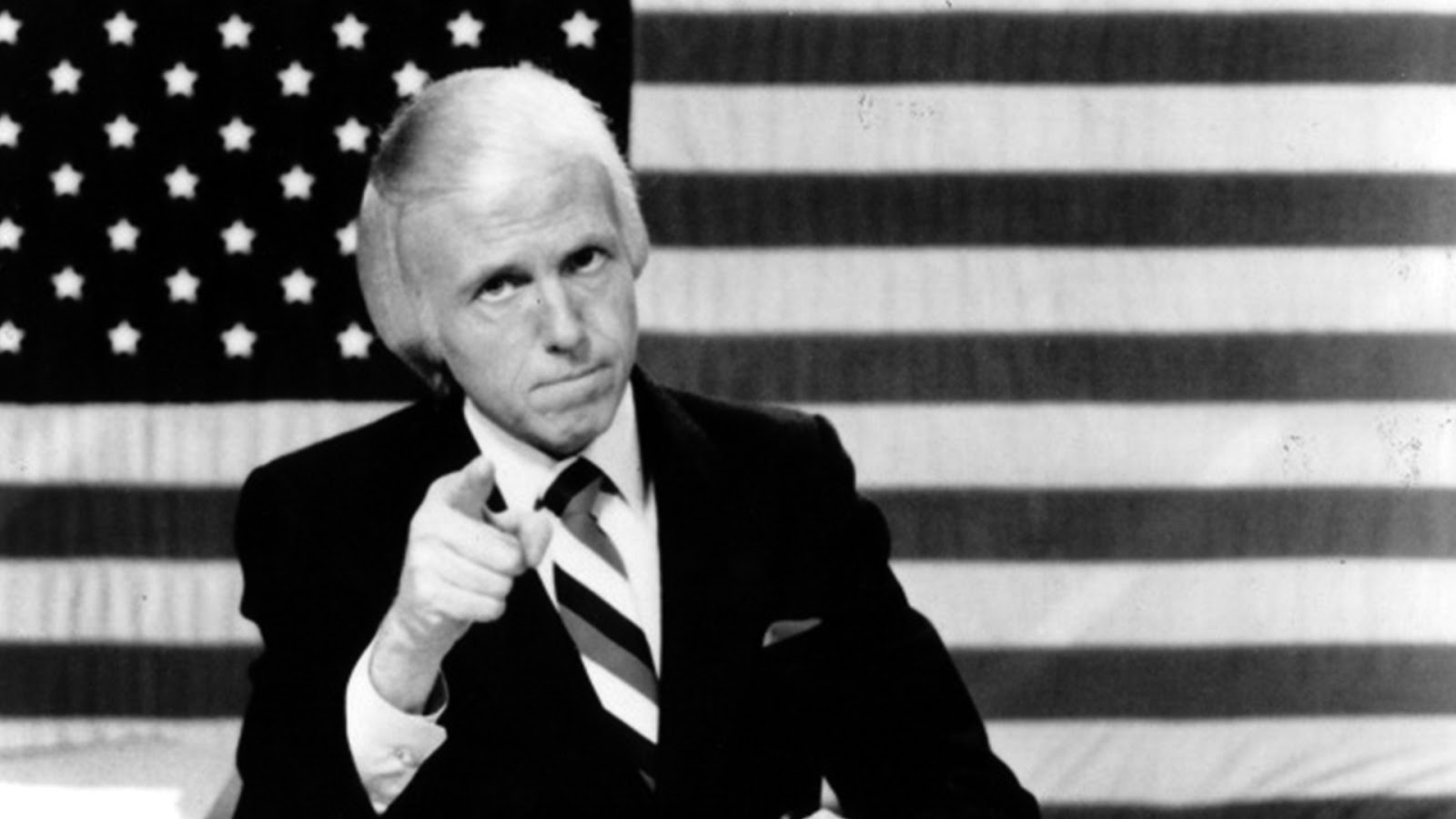
Wally George (born George Walter Pearch; December 4, 1931 – October 5, 2003) was an American conservative radio and television commentator. Calling himself the "Father of Combat TV," he was a fixture on Southern California television for three decades (1950s-80s) as the host of Hot Seat, which began as a local show on KDOC Channel 56, a local Southern California based UHF TV station in Anaheim, Orange County, California in 1983.[1] His other nicknames were "Mr. Conservative" and "Mr. America" in the 1960s-90s and he represented the strong conservative fan base of Orange County and the Coachella Valley of California where he was also on their local TV stations. [2]
Early life
George was born George Walter Pearch in Oakland, California. His father, Walter George Pearch, worked in the marine shipping industry. His mother, Eugenia Clinchard, had been a vaudeville performer and child movie actress, in Essanay Studios westerns starring Broncho Billy Anderson. George grew up in San Mateo and was in high school when his parents divorced, after which his mother moved to the Hollywood Hills in Los Angeles.
Career
By age 14, George was working as a disc-jockey at AM radio station KIEV in Glendale, California, followed by work at other local stations. In 1965 he was credited with writing an episode of the long-running television series Bonanza.[3] In 1969 he launched The Wally George Show on FM radio station KTYM in Inglewood, California. Three years later he became producer and co-host of The Sam Yorty Show on Los Angeles television station KCOP with his political mentor Sam Yorty, the former mayor of Los Angeles. By 1979 George had his own talk show at KCOP, and when it moved to fledgling UHF station KDOC in Anaheim, he launched Hot Seat in 1983.[4]
George was famous for his combative, almost farcical interview style and shocking antics on Hot Seat. He played to an eager studio audience and often ejected guests from the set, using uniformed private security guards. Hanging behind him were pictures of John Wayne and the U.S. space shuttle, both with strong links to Orange County, California, where the episodes were taped. He staunchly supported then-president Ronald Reagan, and his show was sponsored mostly by local Orange County businesses. George's gray slacks, navy blue blazer, white dress shirt and U.S. flag tie along with his platinum blond hair--combed straight down at ear-length and parted on the side--became a conservative style trademark. He called his delivery "combat TV," a phrase he used in his 1999 autobiography, and Johnny Carson labeled George "the William F. Buckley of the cockfighting set."

Hot Seat, in turn, became known for its provocative guest appearances. A 1983 appearance by Blase Bonpane[5] ended when Bonpane overturned George's desk and walked out of the studio. When similar incidents occurred on later talk shows, such as those hosted by Geraldo Rivera and Jerry Springer, George called them "copycat combat." However, many claimed that the stunts on Hot Seat were staged, and that some guests were hired to be controversial and disruptive.
By 1993, George's health woes brought an end to the show. He carried on hosting rerun segments until June 2003.
George released a four track 12" (30 cm) EP entitled Wal-ly! Wal-ly! (drawn from the rallying cry of his Hot Seat studio audience) on Rhino Records in 1984.
George played himself in the films Grunt! The Wrestling Movie (1985), A Nightmare on Elm Street 5: The Dream Child (1989), Repossessed (1990) and Club Fed (1990). He played a Porsche salesman in the movie Squanderers (1996).
He gave halftime "studio analysis" and sometimes "endgame news" on the roller derby television program Roller Games which aired in 1989-90 and later on the Nintendo Entertainment System game of the same name. He also appeared on The People's Court program after being sued by an attorney who had been on Hot Seat. E! True Hollywood Story ran a feature on Wally George in 2000.
Personal life
George was married at least six times and had at least six children. His first marriage was to Lillian Kamminga in 1954. They had a daughter and son, Debtralynne Salas and Walter George Pearch, Jr. His marriage to Jane Eager produced actress Rebecca De Mornay (born 1959). In 1992, George threatened to sue De Mornay for calling him a bigamist in The National Enquirer.[6]
In 1962, he married Mary Jo Teipl, and they had a son, Kerry Walter George. He married Linda Yvonne Lowell in 1969, and they had a daughter, Kimberley Jennifer. In 1988, George married Janise Hedges, and they had a daughter, Holly Janise George.
He was a longtime Garden Grove, California, resident. In later life, George lived in Sherman Oaks, California.
Death
Following years of worsening health George died of pneumonia at Fountain Valley Hospital on October 5, 2003. His memorial service was held at the Crystal Cathedral in Garden Grove, California, where he was eulogized by evangelist Robert H. Schuller. He is interred at Forest Lawn Cemetery in Hollywood Hills, California in the Columbarium of Tranquil Memories.
References
1. Los Angeles Times
2. http://articles.latimes.com/1992-07-11/entertainment/ca-1344_1_hot-seat
3. Wally George on IMDb , retrieved 3 October 2011.
4. Obituary "Wally George, 71; Firebrand Host Made Insult TV a Hit With Orange County Show" Los Angeles Times
5. "Grenada Battle Erupts--in a TV Studio"
6. Celebs Get Scoop on Politics, Variety, Army Archerd, June 2, 1992.
Ernst Toch (German: [ˈtɔχ]; December 7, 1887 – October 1, 1964) was an Austrian composer of classical music and film scores. He sought throughout his life to introduce new approaches to music.
Biography
Toch was born in Leopoldstadt, Vienna, into the family of a humble Jewish leather dealer [1] when the city was at its 19th-century cultural zenith. He studied philosophy at the University of Vienna, medicine at Heidelberg and music at the Hoch Conservatory (1909–1913) in Frankfurt.[2] His main instrument was the piano, and he was a pianist of real stature, performing to acclaim throughout much of western Europe. Much of his writing was intended for the piano.

Toch continued to grow as an artist and composer throughout his adult life, and in America came to influence whole new generations of composers. His first compositions date from c. 1900 and were pastiches in the style of Mozart (quartets, 1905 album verses for piano). His first quartet was performed in Leipzig in 1908, and his sixth (Opus 12, 1905) in the year 1909. In 1909, his Chamber Symphony in F major (written 1906) won the Frankfurt/Main Mozart prize. From this time onwards, Toch dedicated himself to being a full-time composer. He won the Mendelssohn prize for composition in 1910. In 1913, he was appointed lecturer of both piano and composition at the College of Music in Mannheim. After winning a further five major prizes for his works, he served four years in the army on the Italian Front during World War I. In 1916, he married Lilly Zwack, the daughter of a banker.
After World War I, he returned to Mannheim to compose, developing a new style of polyphony. He received his Ph.D. degree from Heidelberg University in 1921. He then taught on the faculty of the Mannheim Conservatory where one of his pupils was Hugo Chaim Adler.
Following Hitler's seizure of power in 1933, Toch went into exile, first to Paris and then London, where he wrote film scores. In 1935, he accepted an invitation from the New School for Social Research to go to New York City. He could, however, only secure his living in California by composing film music for Hollywood. Unlike his colleague Erich Wolfgang Korngold, however, Toch never got much attention in the industry and was rarely top-billed. His score for the chase scene in Shirley Temple's 1937 Heidi perhaps remains his best-known piece of film music.
During his residence in California, he was a professor at the University of Southern California, where he taught both music and philosophy. He was also a guest lecturer at Harvard University.
Toch wrote a book on music theory, The Shaping Forces in Music (1948). From 1950 on, he composed seven symphonies, the third of which (Opus 75, 1954) received the Pulitzer Prize three years later. In these later works, he returned to the late Romantic style of his early years.
In 1958, he received the Order of Merit of the Federal Republic of Germany (Grand Merit Cross).
Ernst Toch died in Santa Monica, California, and was interred in the Westwood Village Memorial Park Cemetery in Los Angeles. He is the grandfather of authors Lawrence Weschler and Toni Weschler.
Work
His works often exhibit a humorous aspect. In 1930 he invented "Gesprochene Musik," the idiom of the "spoken chorus." His most performed work is the Geographical Fugue or Fuge aus der Geographie, which he himself regarded as an unimportant diversion. He wrote music for films, symphonies, chamber music, chamber operas. He also wrote books dealing with musical theory: Melodielehre (1923) and The Shaping Forces in Music (1948).
Toch was considered one of the great avant-garde composers in the pre-Nazi era. He won the Pulitzer Prize for Music in 1956 for his Third Symphony (premiered by the Pittsburgh Symphony Orchestra on December 2, 1955).
Works
Symphonies
Symphony No. 1, Op. 72 (1950) (pub. 1951)
Symphony No. 2, Op. 73 (1951) (pub. 1953)
Symphony No. 3, Op. 75 (1955) (pub. 1957)
Symphony No. 4, for orchestra and speaker, Op. 80 (1957) (pub. 1960)
Symphony No. 5 ‘Jephtha, Rhapsodic Poem,’ Op. 89 (1963) (pub. 1965)
Symphony No. 6, Op. 93 (1963) (pub. 1966)
Symphony No. 7, Op. 95 (1964) (pub. 1968)
Concertos
Concerto for Cello and Chamber Orchestra, Op. 35 (1924) (pub. 1925)
Concerto for Piano and Orchestra, (Piano Concerto No. 1), Op. 38 (1926) (pub. 1926)
Symphony for Piano and Orchestra, (Piano Concerto No. 2), Op. 61 (1933) (pub. 1933)
Other orchestral works
Scherzo in B minor, orchestral version, Op. 11 (1904) (pub. c. 1905)
Phantastishche Nachtmusik (Fantastic Serenade), for orchestra, Op. 27 (1920) (pub. c. 1921)
Five Pieces for Chamber Orchestra, Op. 33 (1924) (pub. 1924)
Komödie für Orchester in Einem Satz (Comedy for Orchestra in One Movement), Op. 42 (1927) (pub. 1927)
Vorspiel zu einem Märchen (Prelude to a Fairy Tale), for orchestra, Op. 43a (1927) (pub. 1927) (Adapted from the overture of Princess and the Pea)
Fanal (Beacon) for Organ and Orchestra, Op. 45 (1928) (pub. 1928)
Bunte Suite (Motley Suite), for orchestra, Op. 48 (1928) (pub. 1929)
Kleine Ouvertüre zu der Fächer (Little Overture to the Fan), for orchestra, Op. 51 (1929) (pub. 1929)
Kleine Theater-Suite (Little Theater Suite), for orchestra, Op. 54 (1930) (pub. 1931)
Big Ben: Variation-Fantasy on the Westminster Chimes, for orchestra, Op. 62 (1934) (pub. 1935)
Pinocchio: A Merry Overture for Orchestra (1935) (pub. 1937)
The Idle Stroller Suite, for orchestra (1938) (Unpublished)
The Covenant (Sixth movement from The Genesis Suite), for orchestra and narrator (c. 1945) (Score lost; recording exists)
Hyperion: A Dramatic Prelude for Orchestra, Op. 71 (1947) (pub. 1950)
Circus: An Overture, for orchestra (1953) (pub. 1954)
Notturno, for orchestra, Op. 77 (1953) (pub. 1957)
Peter Pan, for orchestra, Op. 76 (1956) (pub. 1956)
Intermezzo for orchestra (1959) (pub. 1962)
Epilogue for orchestra (reorchestration of first movement of Idle Stroller) (1959) (pub. 1964)
Short Story for orchestra (1961) (Unpublished)
The Enamoured Harlequin, for orchestra, Op. 94 (1963) (Unpublished)
Sinfonietta for String Orchestra, Op. 96 (1964) (pub. 1965)
Variations on the Swabian Folk Song "Muss i denn zum Städtele hinaus," for orchestra (1964) (Unpublished)
Chamber
String Quartet no. 6 in A minor, Op. 12 (1904–1905) (Unpublished)
Chamber Symphony in F major, for flute, oboe, clarinet, bassoon, horn, 2 violins, cello and bass (1906) (Unpublished)
String Quartet no. 7 in G major, Op. 15 (1908) (Unpublished)
Vom sterbenden Rokoko (From the Dying Rococo), for violin and piano, Op. 16 (1909) (pub. 1910)
Duos for Two Violins, Op. 17 (1909) (pub. c. 1910)
Romanze, for violin and piano (c. 1910) (pub. 1911)
Serenade for Three Violins, Op. 20 (1911) (pub. 1912)
Sonata for Violin and Piano, Op. 21 (1912) (Unpublished)
Serenade (Spitzweg) for Two Violins and Viola, Op. 25 (1916) (pub. 1921)
String Quartet no. 8 in D-flat major, Op. 18 (1910) (pub. 1911)
String Quartet no. 9 in C major, Op. 26 (1919) (pub. 1920)
String Quartet no. 10 on the Name ‘Bass,’ Op. 28 (1920) (pub. c. 1923)
Tanz-Suite (Dance Suite), for flute, clarinet, violin, viola, bass and percussion, Op. 30 (1923) (pub. 1924) (optional add. strings)
String Quartet no. 11, Op. 34 (1924) (pub. 1924)
Two Divertimentos for String Duet, Op. 37 (No. 1: violin and cello / No. 2: violin and viola) (1925) (pub. 1926)
Sonata for Violin and Piano, Op. 44 (1928) (pub. 1928)
Sonata for Cello and Piano, Op. 50 (1929) (pub. 1929)
String Trio, for violin, viola and cello, Op. 63 (1936) (pub. 1955)
Quintet for Piano, Two Violins, Viola and Cello, Op. 64 (1938) (pub. 1947)
String Quartet no. 12, Op. 70 (1946) (pub. 1949)
Dedication, for string quartet or string orchestra (1948) (pub. 1957)
Adagio Elegiaco, for clarinet and piano (1950) (pub. 1987)
String Quartet no. 13, Op. 74 (1953–1954) (pub. 1961)
Sonatinetta, for flute, clarinet and bassoon, Op. 84 (1959) (pub. 1961)
Three Impromptus for Unaccompanied String Instruments, Op. 90a (violin), 90b (viola), 90c (cello) (1963) (pub. 1965)
Quartet for Oboe, Clarinet, Bassoon and Viola, Op. 98 (1964) (pub. 1967)
Wind ensemble
Spiel für Blasorchester (Divertimento for Wind Orchestra), Op. 39 (1926) (pub. 1926; Donaueschingen première)
Miniatur Ouvertüre for 2 flutes, oboe, clarinet, bass clarinet, 2 trumpets, trombone and percussion (1932) (pub. 1932)
Five Pieces for Wind Instruments and Percussion, Op. 83 (1959) (pub. 1961)
for flute, oboe, clarinet, bassoon, 2 horns and percussion
Sinfonietta for Wind Instruments and Percussion, Op. 97 (1964) (pub. 1967)
for 2 flutes, 2 oboes, 2 clarinets, 2 bassoons, 2 horns, 2 trumpets and percussion
Piano
Melodische Skizzen (Melodic Sketches), Op. 9 (1903) (pub. c. 1903–1905)
Three Preludes, Op. 10 (c. 1903) (pub. unknown)
Scherzo in B minor, original piano version, Op. 11 (1904) (pub. c. 1905)
Stammbuchverse (Album Verses), Op. 13 (1905) (pub. 1905)
Begegnung (Meeting) (1908) (Unpublished)
Reminiszenzen (Reminiscences), Op. 14 (1909) (pub. 1909)
Canon (Aus Dem ‘Tagebuch) (1914) (pub. 1915)
Burlesken (Burlesques), Op. 31 (1923) (pub. 1924)
Gemächlich
Lebhaft
"Der Jongleur"
Three Piano Pieces, Op. 32 (1924) (pub. 1925)
Capriccetti, Op. 36 (1925) (pub. 1925)
Tanz-und-Spielstücke (Pieces for Dancing and Playing), Op. 40 (c. 1926) (pub. 1927)
Sonata for Piano, Op. 47 (1928) (pub. 1928)
Kleinstadtbilder (Echoes From a Small Town), 14 Moderately Easy Piano Pieces, Op. 49 (1929) (pub. 1929)
5 × 10 Etudes, Op. 55–59 (1931) (pub. 1931)
Profiles, Op. 68 (1946) (pub. 1948)
Ideas, Op. 69 (1946) (pub. 1947)
Diversions, Op. 78a (1956) (pub. 1958)
Sonatinetta, Op. 78b (1956) (pub. 1958)
(Untitled canon) (1959) (Unpublished)
Three Little Dances, Op. 85 (1961) (pub. 1962)
Reflections, Op. 86 (1962) (pub. 1962)
Sonata for Piano Four-Hands, Op. 87 (1962) (pub. 1963)
Toch's piano music has been recorded by Austrian pianist Anna Magdalena Kokits.[3]
Other solo instrumental works
Three Original Pieces for the Electric Welte-Mignon Piano (1926) (Unpublished)
Studie, for mechanical organ (1927) (Unpublished)
Two Études for Violoncello Solo (1930) (pub. 1931)
Operas
Die Prinzessin auf der Erbse [The Princess and the Pea], Op. 43 (1927) (pub. 1927)
Musical fairy tale in one act; text after H. C. Andersen by Benno Elkan; English and German versions exist
Egon und Emilie [Edgar and Emily], Op. 46 (c. 1928) (pub. 1938)
Chamber opera in one act; "Not a family drama" (Kein Familiendrama); text by Christian Morgenstern; English and German versions exist
Der Fächer [The Fan], Op. 51 (1929 or 1930) (pub. 1930)
Opera-capriccio in three acts; text by Ferdinand Lion. Der Fächer was rediscovered and produced for the first time since the 1930s by the Bielefeld Opera conducted by Geoffrey Moull in 1995.[4]
Scheherazade: The Last Tale [Das letzte Märchen], Op. 88 (1962) (pub. 1965)
Opera in one act; text by Melchior Lengyel, English translation by Cornel Lengyel[5]
Choral
An mein Vaterland (To My Fatherland), Op. 23 (1913) (Unpublished)
for large orchestra, organ, solo soprano, mixed chorus and boys’ chorus
Gesprochene Musik (Speaking Music), (1930). Only No. 1 of 3 published:
Geographical Fugue, for speaking chorus (1930) (pub. 1950) No. 1 of 3 from Gesprochene Musik
Der Tierkreis (The Zodiac), for women’s chorus (1930) (Nos. 1 and 2 pub. 1930; No. 3 unpublished)
Das Wasser (The Water), Cantata after a text by A. Döblin, Op. 53 (1930) (pub. 1930)
for tenor, baritone, narrator, chorus, flute, trumpet, percussion and strings
Cantata of the Bitter Herbs, Op. 65 (1938) (pub.?)
for solo soprano, alto, tenor and baritone, narrator, chorus and orchestra
The Inner Circle, six a cappella choruses for mixed chorus, Op.67 (1945, revised 1953) (pub. 1953)
Cui bono (Thomas Carlyle) / The Lamb (William Blake) / Extinguish my eyes (Rainer Maria Rilke) / O World, thou chosest not (George Santayana) / Have you not heard his silent step (Rabindranath Tagore) / 6. Goodbye, proud world (Ralph Waldo Emerson)
Phantoms, Op.81 (1957) (pub.?)
for male and female speakers, women’s speaking chorus, flute, clarinet, vibraphone, xylophone, timpani and percussion
Song of Myself, for mixed chorus (1961) (pub. 1961)
Valse (Waltz), for speaking chorus and optional percussion (1961) (pub. 1962)
Other vocal works
Ich wollt, ich wär ein fisch (I wish I were a fish), for high voice and piano (1920) (Unpublished)
Die Chinesische Flöte (The Chinese Flute), Op. 29 (1922) (pub. 1923)
for soprano, 2 flutes, clarinet, bass clarinet, percussion, celesta and strings. Exists in German and English versions
Nine Songs for Soprano and Piano, Op. 41 (1926) (pub. 1928). Exists in German and English versions
Music for Orchestra and Baritone, Op. 60 (1931) (pub. 1932)
Chansons sans paroles, for voice and piano (1940) (Unpublished)
Poems to Martha, for medium voice and string quartet (1942) (pub. 1943)
There Is a Season for Everything, for mezzo-soprano, flute, clarinet, violin and cello (c. 1953) (pub. 1953)
Vanity of Vanities, for soprano, tenor, flute, clarinet, violin, viola and cello (1954) (pub.?)
Lange schon haben meine Freunde versucht (My friends have long tried), for soprano and baritone (1958) (Unpublished)
Incidental music
Der Kinder Neujahrstraum (The Children’s New Year’s Dream) (stage play), Op. 19, for solo soprano, alto, tenor and baritone, chorus and orchestra (1910)
Anabasis (radio play), for flute, clarinet, 2 trumpets, trombone, tuba, percussion and chorus (1931)
Im fernen Osten (In the Far East) (radio play), for flute, 2 trumpets in C, mandolin, guitar, 2 violins, viola, cello, percussion, chorus and male solo voice (1931)
Die Heilige von U.S.A. (The Saint of the U.S.A.) (stage play), for wind ensemble, percussion, piano, harmonium, alto solo and chorus (1931)
König Ödipus (Oedipus Rex) (radio play), for 2 clarinets, 2 trumpets, 2 trombones, percussion and strings (1931)
Medea (radio play), for wind ensemble, percussion and speaking chorus (1931)
Die Räuber (The Robbers) (radio play), for 2 trumpets in C, bass trumpet or trombone and percussion (1931)
Die Rollen des Schauspielers Seami (The Roles of the Actor Seami) (radio play), for flute, clarinet, violin, banjo, guitar and percussion (1931)
Turandot (radio play), for flute, clarinet, trumpet in C, cello, piano and percussion (1931)
Uli Wittewüpp (stage play), for clarinet, trumpet, percussion, piano and strings (1931)
Napoleon, oder die 100 Tage (Napoleon, or the 100 Days) (radio play) (1931 or 1932)
Das Kirschblütenfest (The Cherry Blossom Festival) (stage play), for timpani, percussion, harmonium and strings (1927)
The Gates of Carven Jade or The Garden of Jade (radio play), for flute, clarinet, banjo, guitar, violin and soprano solo (c. 1934)
William Tell (stage play), for flute, 2 clarinets, bassoon, trumpet, horn, 2 trombones, percussion and chorus (1939)
All incidental music listed is unpublished except Das Kirschblütenfest (pub. 1927).
Film music
Catherine the Great (composed 1933)
The Private Life of Don Juan (composed 1934)
Little Friend (composed 1934)
Peter Ibbetson (composed 1935)
Outcast (composed 1936)
On Such a Night (composed 1937)
The Rebel Son (1938)
The Story of Alexander Graham Bell (composed 1939)
The Cat and the Canary (composed 1939)
The Ghost Breakers (composed 1940)
Dr. Cyclops (composed 1940)
Ladies in Retirement (composed 1941)
First Comes Courage (composed 1943)
None Shall Escape (composed 1943)
Address Unknown (composed 1944)
The Unseen (composed 1945)
Books
Beiträge zur Stilkunde der Melodie (1921) – dissertation for Heidelberg University
Melodielehre (1923) – based upon the dissertation
The Shaping Forces in Music: An Inquiry into the Nature of Harmony, Melody, Counterpoint, Form (1948) – uses material from the dissertation
Notes
1. Introduction to the Dover edition, The Shaping Forces in Music, Ernst Toch, Dover Publications, 1977.
2. Peter Cahn: Das Hoch'sche Konservatorium in Frankfurt am Main (1878–1978), Frankfurt am Main: Kramer, 1979
3. Hum, Peter (2017-09-21). "Austrian pianist Anna Magdalena Kokits, on transmitting the "indescribable" through music." Ottawa Citizen.
4. Theater in Bielefeld 1975–1998, Kerber Verlag, Bielefeld, Redaktion Heidi Wiese, Heiner Bruns, Alexander Gruber, Fritz Stockmeier 1998, ISBN 3-933040-03-5
5. Toch, Ernst: "The Shaping Forces in Music," pg. 240–257, Dover Publications, Inc., 1977, Library of Congress: 76-9950, Checklist of Compositions by Lawrence Weschler
References
Front Page of the Toch Archive Contains a Searchable List of Works
Article on Toch's symphonies
Jezic, Diane Peacock (1989). "Toch Worklist Compiled by Alyson McLamore". The Musical Migration and Ernst Toch. Ames, Iowa: Iowa State University Press. pp. 165–171. ISBN 0-8138-0322-5.
Jung, Hermann (editor) (2007). Spurensicherung: Der Komponist Ernst Toch (1887–1964) — Mannheimer Emigrantenschicksale. Frankfurt am Main: Peter Lang. ISBN 978-3-631-57400-3.
Weschler, Lawrence (1974). Ernst Toch, 1887–1964: A Biographical Essay Ten Years After His Passing. UCLA, Los Angeles.
Jens F. Laurson, "Korngold Sr. and Jr. – Cliché, Critic and Composer", Classical WETA at the Wayback Machine (archived August 14, 2011) (accessed 31 January 2014).
Korngold Sr. and Jr. – Cliché, Critic and Composer, Jens F. Laurson, above article, migrated to ionarts.org
Chasing Heidi: Ernst Toch – The Composer and His Chamber Music, Jens F. Laurson, Classical WETA